Do proponents know what “reliably controlled authorship testing” means? (Part 1)
In today’s blog post, I want to explore the question of whether current-day proponents of FC/S2C/RPM fully understand what researchers mean by “reliably controlled testing” and why it’s important in validating messages obtained using these techniques. I’ve written about these issues in the past, but for reasons I’ll explain, I believe it bears repeating.
We’ve recently had people leave comments for us with links to lists of articles that, supposedly, prove proponent claims about FC authorship, apraxia, or mind-body disconnect in autism, but when we closely examine the lists, the articles either don’t mention FC/S2C/RPM authorship or fail to contain evidence that backs up the commenters’ claims of motor planning problems in individuals with autism. (See Critiques of Pro-FC Articles and Misleading Articles)
As Katharine and the other authors of a recent systematic review experienced, even the reviewers of an academic systematic review into S2C/RPM, apparently, didn’t understand the purpose of and design of systematic reviews. (See her blog post titled “FC-friendly gatekeeping of FC critical publications.”). Katharine’s first-hand experiences with FC-friendly gatekeeping adds another layer of complexity to documenting FC/S2C/RPM authorship (or the lack thereof). If you haven’t yet read her blog post, I encourage you to do so.

A table top barrier was used in this O.D. Heck Center authorship study to “blind” facilitators from seeing the pictures presented to their clients, but the facilitators and clients were allowed to interact with each other—unimpeded—during letter selection. (Prisoners of Silence, 1993)
I have the sense, too, from reading social media comments that proponents (or at least the ones who choose to engage with my posts) have a limited concept of what reliably controlled tests are designed for and how they are implemented. I’m guessing there are at least two reasons for this: 1) many proponents of FC/S2C/RPM have rejected the expert opinions from professionals trained in the treatment of speech/language disorders in people with autism and other developmental disabilities; and 2) most, if not all, current-day facilitators have never read the original studies and don’t have an understanding of FC from a historical perspective. Instead, they’re taught in workshops that the tests are adversarial and are designed to trick the individuals being facilitated into giving the wrong answers, and that the researchers want the tests to fail. Nothing could be further from the truth. (See Controlled Studies)
Even in the early days of FC (circa 1990) when Rosemary Crossley and Douglas Biklen were heavily promoting the technique in Australia and the United States, proponents of FC were encouraged not to test for competence and were shielded from the fact that reliably controlled testing had repeatedly uncovered a major flaw in the technique: that facilitators (many of them trained by Crossley) were, wittingly or unwittingly, controlling letter selection. This would later be true of Biklen’s Syracuse-trained facilitators as well. (See Prisoners of Silence)

Screenshot of a 1992 article from the “Word of Mouth” newsletter circulating in the public schools encouraging facilitators to avoid testing for competence.
Almost from FC’s inception, critics began expressing concerns that facilitators in their enthusiasm to use and promote a technique that they were told was “revolutionary” were, themselves, authoring the FC-generated messages. (See Critiques of FC). They pointed to a well known phenomenon, the ideomotor response, to explain at least some of the “non-conscious” cueing facilitators exhibited during letter selection. (See the Ideomotor Response).
By the mid-1990s, major organizations publicly opposed the use of the technique because proponents were unable to prove their claims of communication independence under reliably controlled conditions. Many of these opposition statements are still in place today, with other organizations adopting opposition statements well into the 2000s. (See Opposition statements).
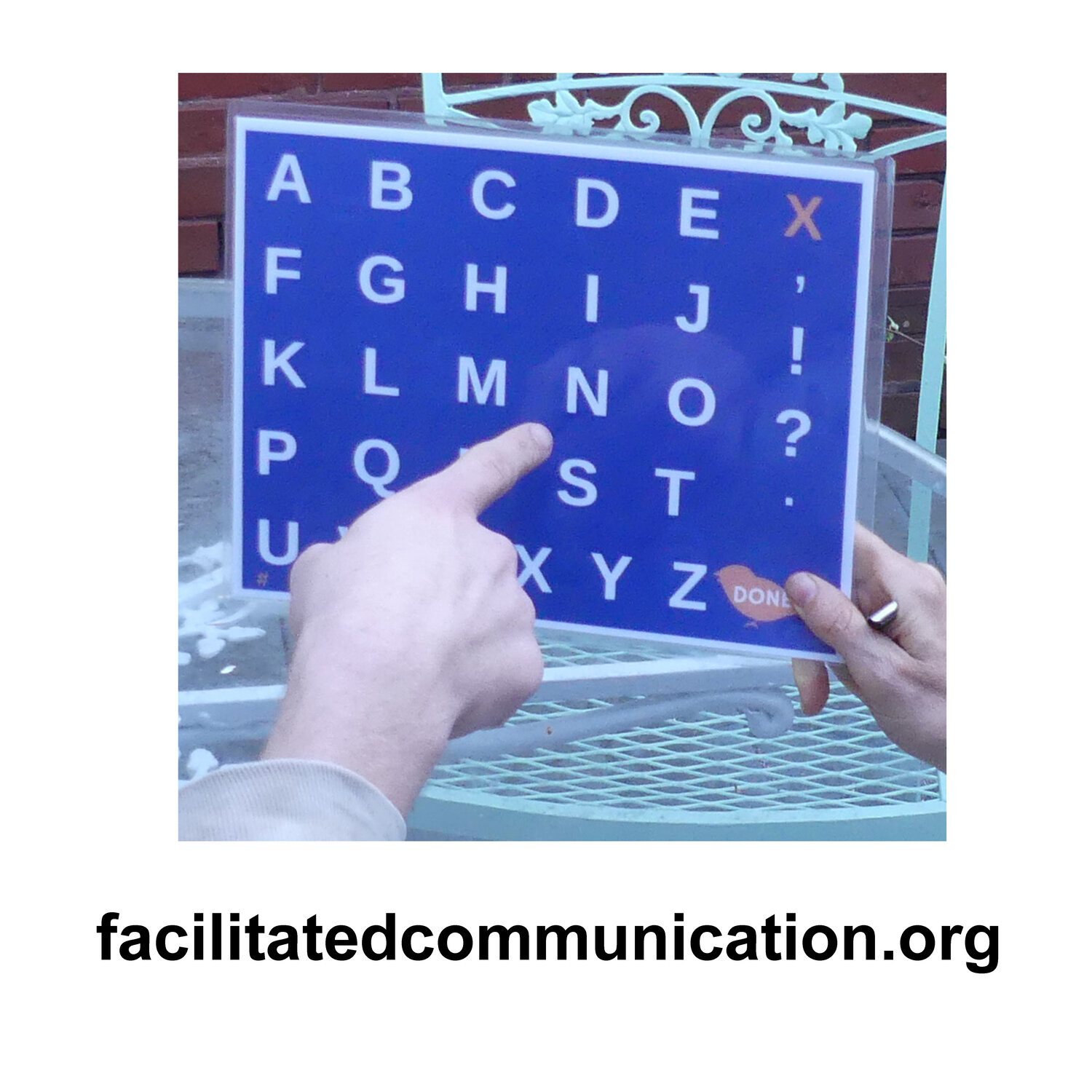
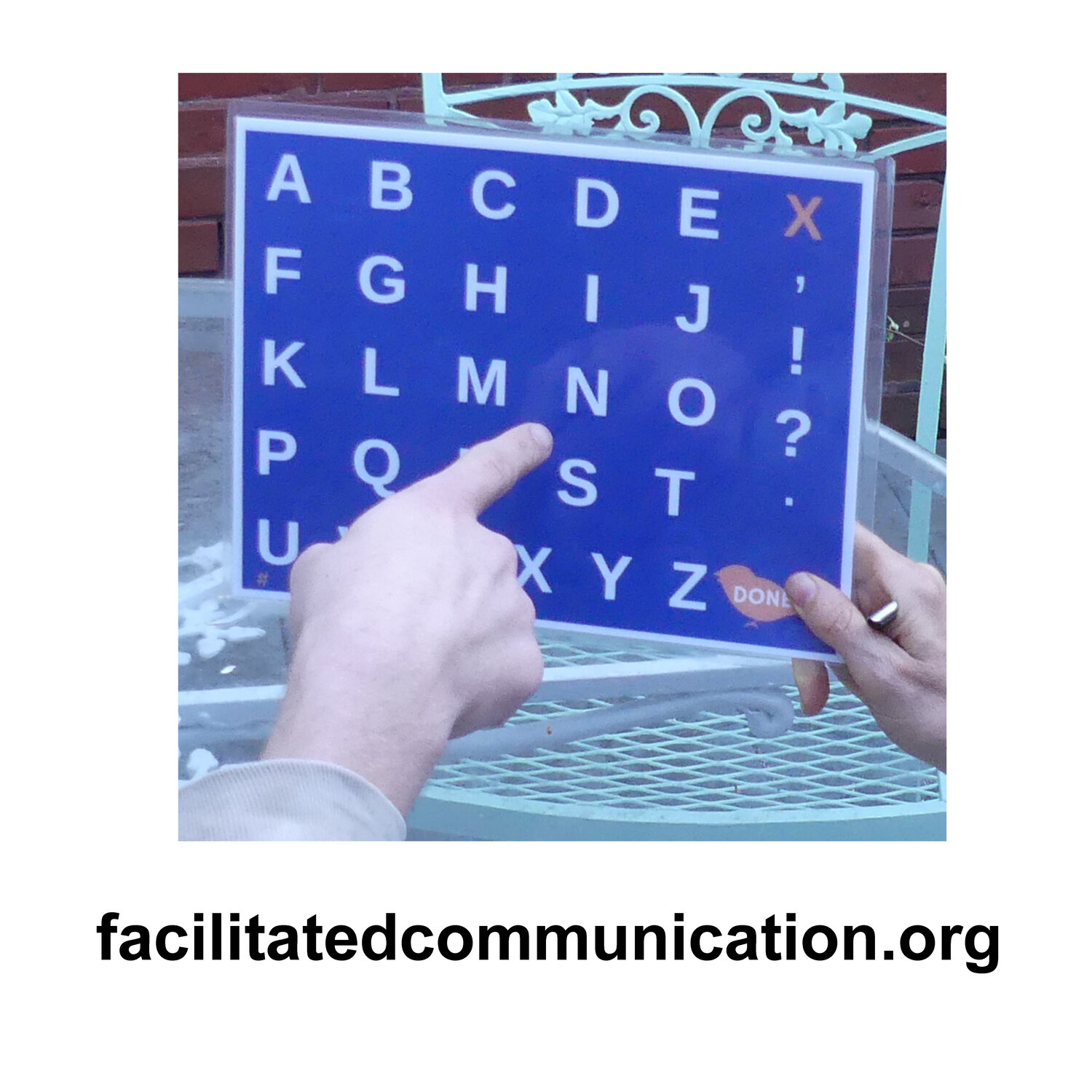
In early studies of FC (1970s-1990s), researchers focused on physical touch—the primary characteristic of “old-school” FC, but as FC evolved over the decades, facilitators, perhaps in a somewhat natural progression, adapted their behaviors to “support” their clients in ways that relied less on physical touch and more on visual and auditory cueing. The rationale was that if the facilitators held the letter board in the air and the clients pointed to the letter board without the facilitators’ direct physical touch, then the resulting written output would, they thought, address the problem of facilitator cueing and control. (It didn’t).
At the very least, these forms of FC look more convincing to observers. Most people, when they observe a spelling session, focus on the letter board and often miss the visual and auditory cues of the facilitators. And, unfortunately, the inventors of these “no-touch” forms of FC also adopted a “no test” attitude toward testing for authorship, claiming that testing for authorship (e.g., checking for comprehension skills in their clients and ruling in or ruling out facilitator cueing and control over letter selection) breaks the trust bond between the facilitators and their clients. For some proponents, doubting FC/S2C/RPM is considered an act of epistemological violence.
However, for critics, the problem isn’t with the facilitator-client relationship. Critics accept that people who adopt FC/S2C/RPM or their variants do so because they want to help their client or loved one in some way. Rather, the problem with FC/S2C/RPM is with the techniques themselves. Facilitator cueing is built into the techniques and, regardless of how well-trained and conscientious facilitators may be, they can and do influence letter selection often without understanding the extent to which they do so.
Almost anyone can understand that touching a person’s wrist, elbow, shoulder or other body part can influence letter selection, but so, too can visual cues (e.g., head nods, body movements, hand signals) and verbal cues (e.g., utterances that indicate the sounds of letters or verbal directions like “up, up, up” and “right next door”). Holding a letter board in the air, too, can be problematic as facilitators, often without realizing it, push, pull, and angle the letter board in ways that assist clients in selecting target letters. One way this cueing happens is when facilitators “reset” the letter board after each letter selection. This may also be one reason why facilitators hold the letter board in the air rather than position the board on a stable surface.
Proponents claim that messages obtained using FC/S2C/RPM represent the words of their clients and are “independent,” but critics of these techniques point out that a client’s dependence on the facilitator for cues is not independence.
Researchers and skeptics of FC recognized the inherent problems with the technique early on and realized that, somehow, facilitators needed to be tested to make sure that the facilitated messages weren’t inadvertently being controlled by the (literate) facilitator. To solve the problem, researchers realized that they needed to distinguish the facilitators’ responses from the clients’ responses while the facilitator-client pairs were engaged with the spelling activity. In other words, they needed to find a way to determine who was controlling letter selection.
The solution researchers came up with was to design tests that controlled for facilitator behaviors during the spelling activity. The most common format used by researchers is message-passing tests where the facilitators interact as usual with their clients during the testing, but their (the facilitators’) access to test stimuli (e.g., pictures, words, objects) is highly regulated. Sometimes the facilitators are given access to test stimuli (e.g., pictures, words, objects) and sometimes the facilitators are “blinded” from the test stimuli (e.g., not given access to the pictures, words, objects).
The goal of authorship testing is to determine whether the clients can label or otherwise spell out words to common objects and activities that their facilitators have not had access to—that is, can the clients understand and use written language independently to spell out answers to information they’ve been given by the examiners when their facilitators don’t know the answers? This is, after all, what proponents of FC/S2C/RPM claim.
As I’ve mentioned in previous blog posts, the controlled authorship tests have demonstrated that if the facilitators are not given access to the test information, the resulting answers are 1) unintelligible (i.e., the clients can’t spell), 2) correctly spelled but irrelevant to the questions being asked (i.e., facilitator guesses) or 3) correctly spelled but based on information shown to the facilitator and not to the person being facilitated (i.e., facilitator controlled).
The protocols for this type of testing have been in place at least since the 1970s (Von Tetzchner 1996 and 1997). But, for some reason, modern-day facilitators continue to refuse to participate in authorship testing by claiming:
that authorship tests are unethical,
that facilitator cueing and control only occurs in “bad” or “poorly trained” facilitators, and/or
that “modern spelling methods” (e.g, S2C/RPM) are different than the old-school FC, in that clients can’t be cued if the facilitator does not touch them.
My guess is there is at least one other reason why proponents don’t want to participate in reliably controlled testing: hundreds of client/facilitator pairs have been tested with thousands of trials and not one of these tests in the past 30+ years has proven proponent claims of communication independence. I’ve seen proponents blame the test designs. I’ve also seen proponents blame their clients for not taking the tests seriously enough—so much so they (the clients) sabotage the testing—but to me that makes no sense. If FC/S2C/RPM-generated messages are “independent,” then why would it matter if the facilitator didn’t know the answer to the test question? A more honest answer is that the profoundly autistic individuals being subjected to the techniques did not have the language and literacy skills to spell out the names and/or functions of common objects without complete dependence on their facilitators.
Proponents of these techniques want FC/S2C/RPM to be recognized as legitimate, evidence-based forms of Augmentative and Alternative Communication (AAC), but for that to happen, proponents would also need to demonstrate under reliably controlled conditions that the written output was not influenced by the facilitators (however inadvertently). If they don’t like the existing protocols for reliably controlled testing then perhaps, instead of avoiding the testing, they can suggest ways to test for facilitator cueing and control that both rule out facilitator behaviors and keep the trust bond between facilitators and clients intact. On social media, I’ve frequently invited proponents to offer suggestions about how to rule out facilitator cueing and control, but to date, none have responded with any meaningful suggestions to address this problem.
As I see it, proponents have, in a sense, painted themselves into a corner because:
If, like critics say, S2C/RPM and their variants are forms of FC, then that means they (the proponents) are choosing to ignore or downplay the fact that FC has been thoroughly discredited; and
If, like proponents say, S2C/RPM and their variants are not forms of FC, then that means proponents still need to prove their claims under reliably controlled conditions.
In my next blog post, I’ll continue this discussion by reviewing the systematic review of S2C/RPM and their variants that Katharine discussed in her blog post and that was published in July 2026. By looking at the exclusionary criteria from the review, we can get an idea of the types of information proponents are using to promote the techniques and learn what the authors of the review found out about S2C/RPM authorship studies.
References and Recommended Reading
Schlosser, R.W., Howard, S., Bryant, L. et al. Systematic Review of Authorship in Rapid Prompting Method, Spelling to Communicate, and Variants: Outcomes, Significance and Clinical Implications. Review Journal of Autism Development and Disorders (2026). https://doi.org/10.1007/s40489-026-00569-7
Von Tetzchner, S. (1997, January 1). Historical issues in intervention research: Hidden knowledge and facilitating techniques in Denmark. International Journal of Language and Communication Disorders. 32 (1), 1-18. DOI: 10.3109/13682829709021453
Von Tetzchner, S. (1996, June 1). Facilitated, automatic and false communication: current issues in the use of facilitating techniques. European Journal of Special Needs Education, 11 (2), 151-166. DOI: 10.1080/0885625960110201
Blog Posts Discussing Early Authorship Testing
When did the FC leadership know about the fatal flaws with their technique? (Part 1)
When did the FC leadership know about the fatal flaws with their technique? (Part 2 - IDRP)