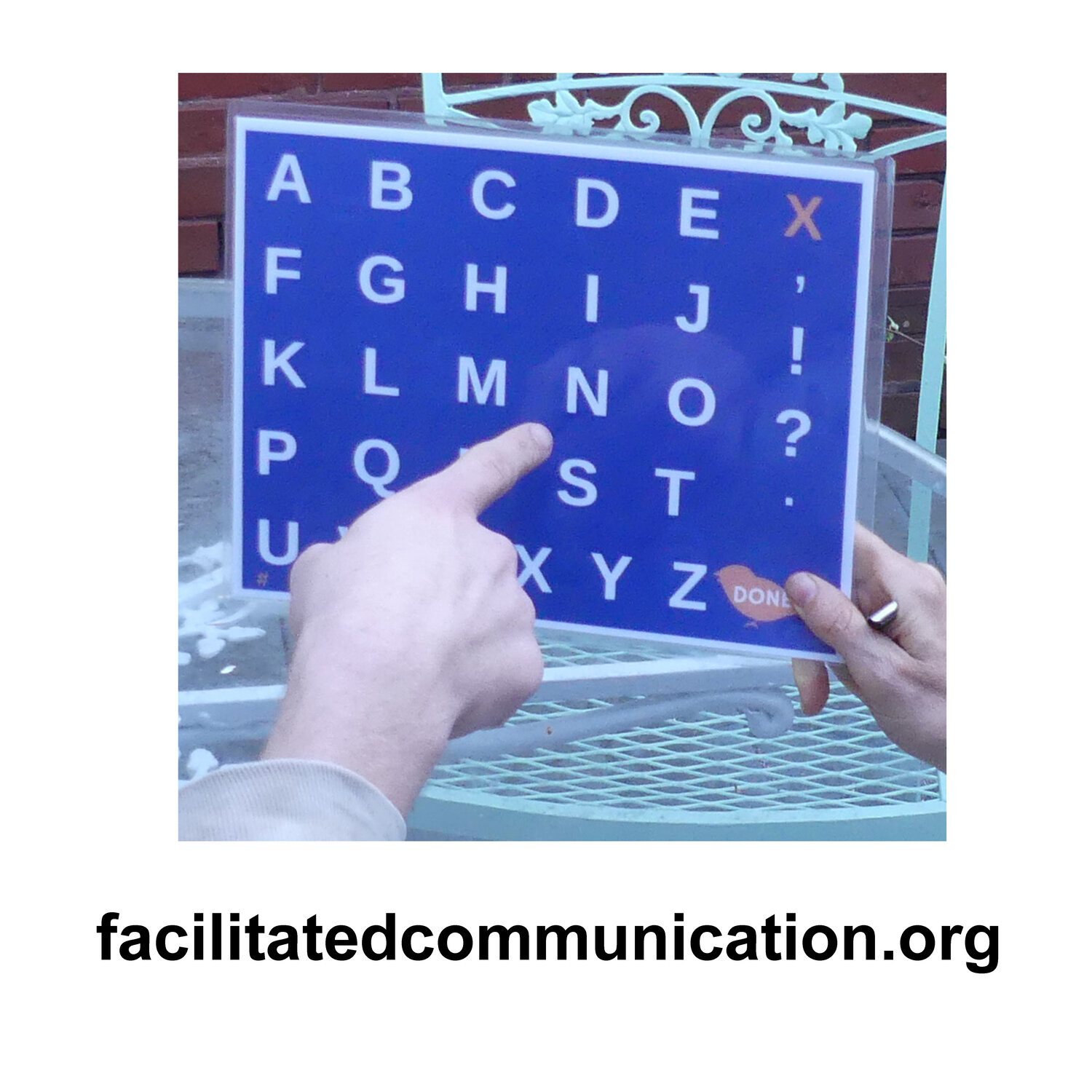
When did the FC leadership know about the fatal flaws in their technique? (Part 4 – Crossley’s Tips)
This is the fourth and final blog post in a series analyzing a Facilitated Communication Digest article dated May 1993 and published by Syracuse University’s Institute on Community and Inclusion (ICI) (formerly the Facilitated Communication Institute but currently known as Inclusion and Communication Initiatives). I’ve put links to the previous blog posts in this series below.
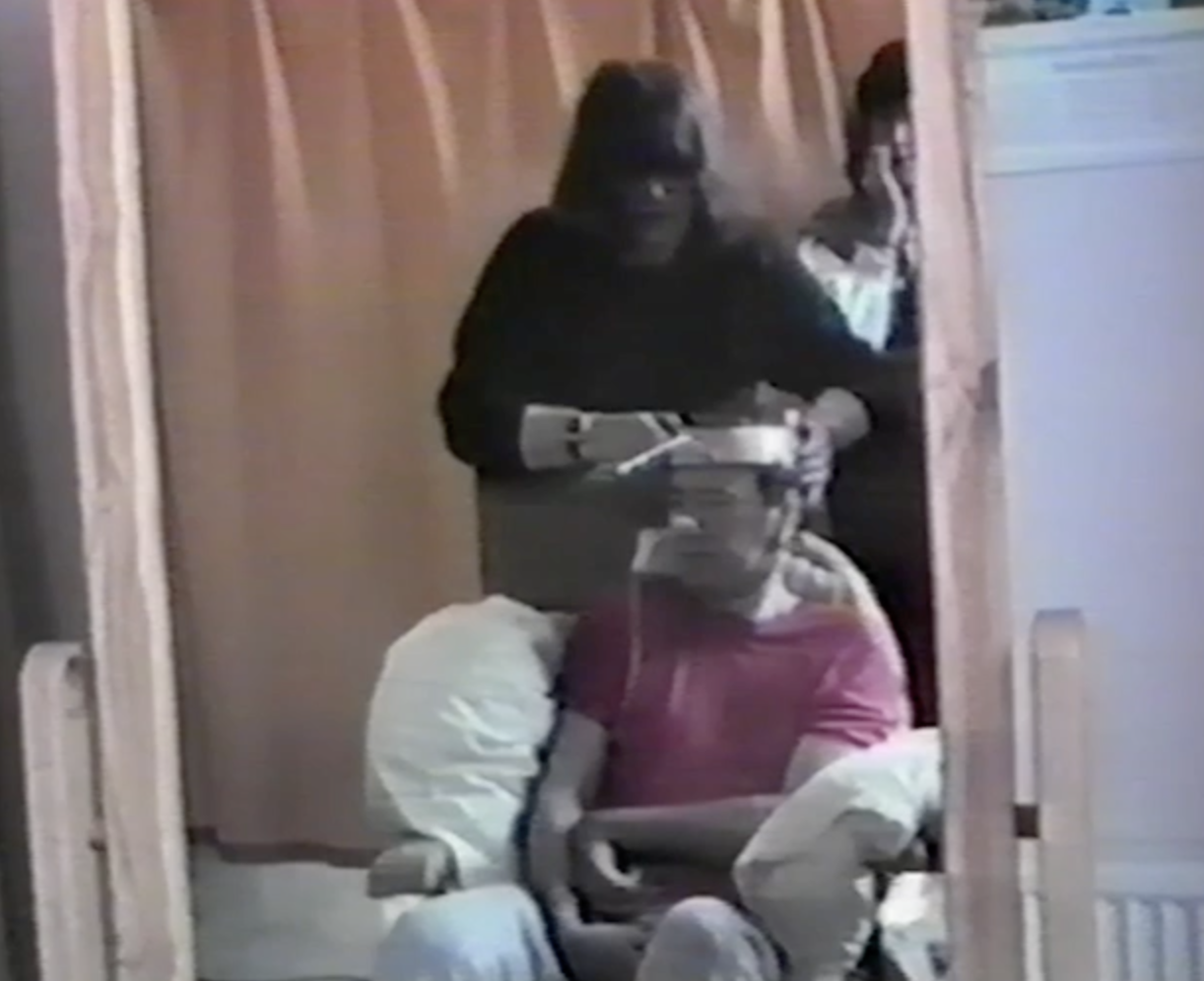
FC founder Rosemary Crossley using Facilitated Communication with someone in a coma to make an important decision about housing and medical care. (Prisoners of Silence, 1993)
The article is titled Issues of Influence: Some Concerns and Suggestions, which belies the fact that by 1989, the FC leadership (namely Rosemary Crossley of the DEAL Centre in Australia and Douglas Biklen of Syracuse University in the United States) were fully aware that the issues with FC went beyond facilitator “influence” into the realm of facilitator control over letter selection. (See Cummins and Prior 1992)
The ICI staff conceded in the newsletter that under constrained conditions “sometimes” there was “facilitator influence.” However, the wording they used grossly misrepresented what the researchers found under reliably controlled conditions where the facilitators were blinded from test stimuli: zero correct and independently produced responses by the individuals being subjected to FC. Let me repeat: zero. The problem wasn’t with individual facilitators, but with the technique itself.
The two authorship studies the ICI staff included in their newsletter (Wheeler et al, 1993 and Hudson, 1993) both revealed that, when the information given to facilitators was controlled, the FC-generated responses were 1) unintelligible (the clients couldn’t spell), 2) correctly spelled but not relevant to the questions asked (facilitator guesses) and/or 3) based on information the facilitator had access to but the test participants did not (facilitator controlled).
Other controlled studies conducted around the same time replicated these results. (see Controlled Studies).
These weren’t just “some” concerns the FC leadership was responding to. The controlled, replicated studies clearly showed that facilitators, not those being subjected to FC, were (wittingly or unwittingly) authoring the FC-generated messages. These studies revealed major flaws in the technique (e.g., facilitator cueing and control over letter selection) that Biklen, Crossley, and the ICI downplayed in the newsletter to their followers.
The newsletter revealed also that the ICI’s own trained facilitators were reporting that they had questions about authorship. Their clients, the facilitators complained, were only typing predictable words (e.g., words that the facilitators knew) and that they (the facilitators) were finding it difficult to differentiate their own movements from those of the person being facilitated.
These concerns being expressed by the ICI-trained facilitators about their own influence over letter selection and their clients’ lack of progress were consistent with the findings of reliably controlled tests being conducted at the time by organizations and research groups not associated with the ICI.
Still other facilitators (as mentioned in the newsletter) were claiming that the FC-generated responses were the result of telepathic transference—more red flags for facilitator cueing and control over letter selection. I’ll talk more about telepathy in a moment.
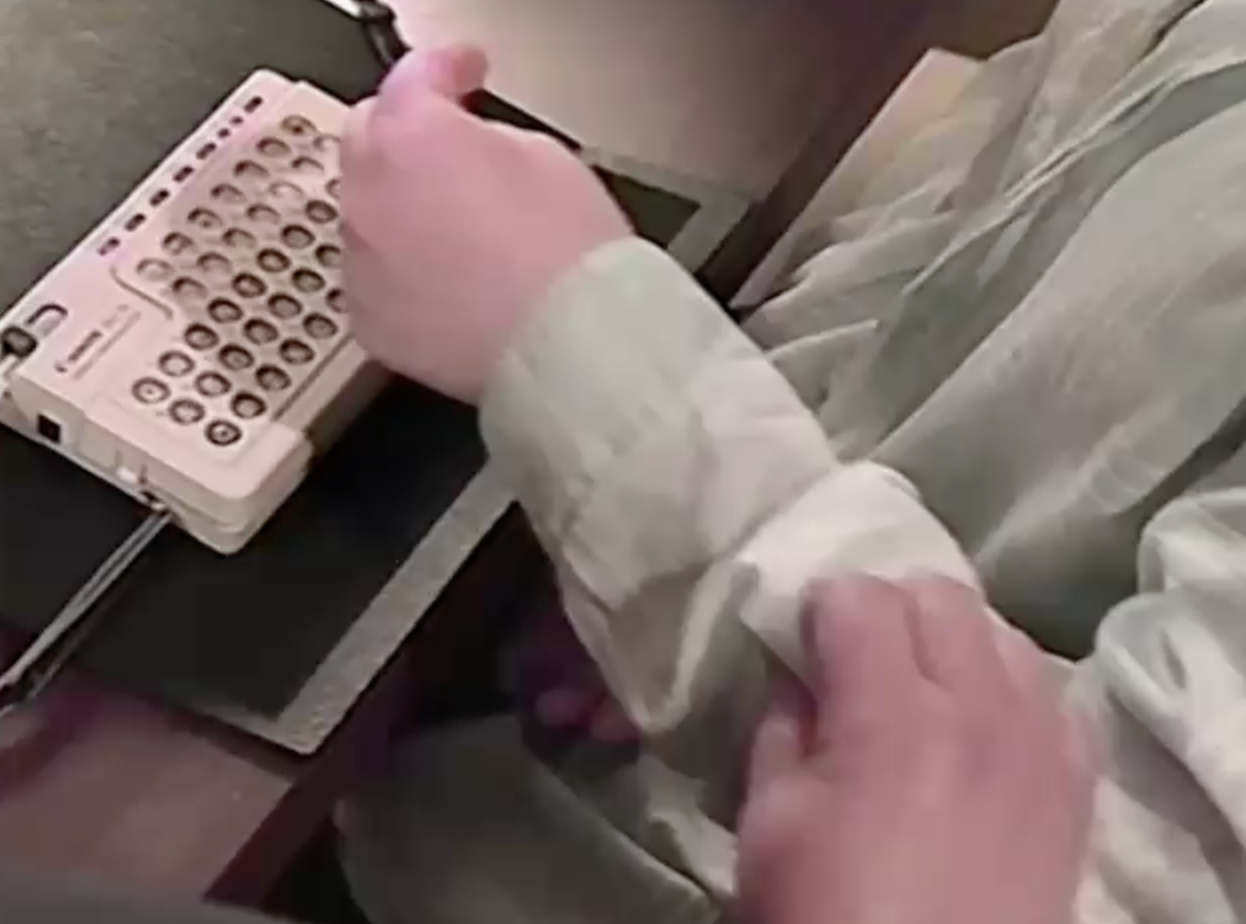
The facilitator pulls the person’s shirt sleeve back after each letter selection in an “error correction” movement taught as part of the facilitation process in the FC workshop. (Prisoners of Silence, 1993). This “error correction” technique caused concerns in facilitators (see the Smith and Belcher study) that they, not their clients, were controlling letter selection.
The facilitators in the Smith and Belcher (1993) study, for example, were concerned that their clients’ hands and wrists were too pliable (e.g. easy to move), so the researchers decided to instruct the facilitators to stop using the “error prevention” technique that was built-into the facilitation process.
The facilitators were surprised to learn that when they stopped pulling their clients’ hand back after each letter selection (as was instructed in the FC training), their clients could independently select letters on the keyboard and turn the Canon Communicator on and off, but they could not produce intelligible letter sequences (e.g, they couldn’t spell) even though, with facilitator “support,” the clients were, purportedly, literate.
But rather than concede to what the scientific findings showed about the major flaw in their technique (e.g., namely facilitator cueing and control), the FC leadership doubled-down on their belief system that FC “worked,” and glossed over the problems with some superficial suggestions to their followers:
Ask clarifying questions of the typist (e.g., is this what you meant to type?)
Give the clients opportunities to make real choices and decisions during the facilitation process.
Make sure the typist looks at the keyboard because (according to Crossley), “single-finger typists who don’t look at the keyboard require more support from their facilitators.” (Note: it’s not possible for anyone to use a one-finger hunt-and-peck style typing method successfully without looking directly at the letter board).
Give the minimum support needed for the person to type and work to fade the support even further.
But, no matter how diligently well-meaning facilitators practice FC, the technique is still fatally flawed. No amount of practice will fix it.
In fact, Rosemary Crossley herself wrote in her “Facilitated Communication Training” book (p. 4) that when she started using FC with her clients “there was no theoretical basis for it” and, to date, this statement still holds true.
The 1993 ICI newsletter splits the responsibilities of FC authorship into two groups: client behaviors and facilitator behaviors.
The clients were tasked with:
Protesting when facilitators overstepped their bounds (e.g., anticipated words or letters, over-interpreted the spelled responses, or used vocal inflections that suggested a desired response), though, in practice, as we’ve seen from FC videos, clients’ non-verbal and verbal communications are often ignored by facilitators. (See Katharine’s blog post No More! No more!)
As mentioned above, the facilitators were tasked with:
Asking clarifying questions
“Allowing and encouraging” typists to express their own opinions
Giving their clients opportunities to make real choices and decisions
Making sure the typist was looking at the keyboard
Providing a minimum of support
Giving constant backwards pressure and pushing away from the keyboard so as not to direct the individual toward specific letters
But none of these suggestions fully addressed the problems with facilitator cueing and control over letter selection.
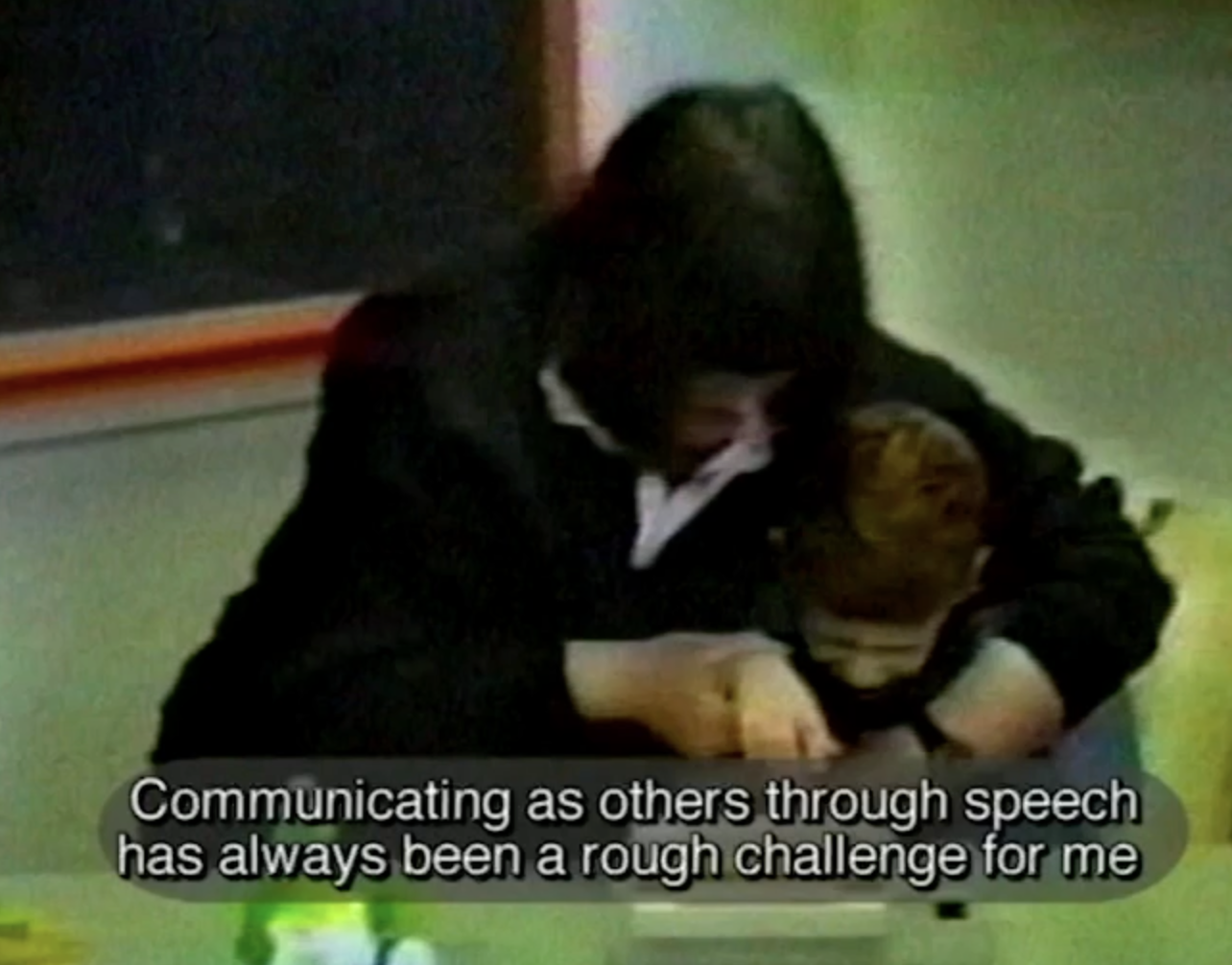
Rosemary Crossley and a small child (Jamie Burke) typing “independently” using FC. Note how Crossley holds onto his forearm and wraps her body around him. How is this independent communication? (Screenshot from the 2002 pro-FC film Inside the Edge)
Curiously, given Crossley’s resistance to reliably controlled testing, she was quite adamant in advising facilitators not to attribute special powers (e.g., telepathy) to either themselves or their clients. The ICI newsletter reflects this in their suggestions 6, 7 and 8, which I’ve paraphrased here:
Don’t attribute special powers to either the facilitator or the communication user.
Don’t impose meaning on FC messages that don’t make sense (e.g. a nonsense string of letters)
If a message appears to be ‘telepathic’, it’s likely due to facilitator control over letter selection or over-interpretation of FC-generated messages that otherwise don’t make sense
Crossley also mentioned the FC-telepathy link in her 1994 FC Training book (in a rare instance where she considered facilitator cueing to be a problem). As I’ve mentioned in previous blog posts about FC and telepathy, Crossley wrote:
In any instance where paranormal abilities are suggested for or by a communication aid user the first step should be to examine the facilitation process closely, both to see if a mechanism for transmission of information can be discerned and to see if the level of facilitation can be reduced. All facilitators involved should review their practices, referring to the basic principles of facilitation, especially monitoring eye contact, pulling back, and reducing support. It is also important that new facilitators are not told to expect ‘telepathic’ communication, because the expectation may lead them…to create it unconsciously. (p. 111)
Except for the tips recommending that authorship be questioned when telepathy claims are made, Crossley’s suggestions to reduce or eliminate facilitator control were, in 1993, and are now, in 2026, essentially meaningless. We know (and I’d argue she, Biklen and the other leaders of the FC movement knew) that facilitator cueing and control is built into the technique. FC (and its variants) doesn’t work unless there is on-going facilitator cueing of one kind or another (e.g., physical, visual, auditory). Why else would proponents respond to questions of authorship with insults and attacks, and refuse to participate in the one type of testing that’s designed to separate facilitator behaviors from those of their clients?

Jamie Burke decades later still requiring the touch of a facilitator on his wrist, forearm, elbow or shoulders to type “Independently” using FC. The facilitator maintains constant eye contact with the letter board or keyboard. (Screenshots from Inside the Edge, 2002). What would happen to Burke’s ability to spell if the facilitator was out of visual and auditory range?
If FC or if any of the so-called “modern spelling methods” worked by any other means than facilitator control, I suspect proponents would not be so outwardly defiant about participating in reliably controlled testing or so condescending and vitriolic to those of us who point out the problems with facilitator-dependent techniques that they, likely, already know are there.
In the first blog post in this series, I mentioned a podcast with two Speech/Language Pathologists discussing their concerns about the relevance of authorship tests that were done more than 10 or 15 years ago. However, because current-day proponents of FC/S2C/RPM are taught in workshops that it’s unethical to participate in authorship testing (testing the SLPs would support), there is a huge time gap between authorship studies that completely discredited the use of FC and the use of the so-called “modern spelling methods” of today.
Given current-day proponents’ refusal to participate in reliably controlled authorship tests, It would be a travesty not to consider the reliably controlled authorship tests from the 1990s and what the researchers discovered about facilitator behaviors that (wittingly or unwittingly) contribute to the fatal flaws in these techniques. Hopefully by looking back, we can identify the flaws in facilitator-dependent techniques, apply them to so-called modern spelling methods (FC/S2C/RPM) and prevent harms in the future.
Note: The author of the ICI newsletter failed to mention Crossley’s involvement in the first false allegations of abuse case in Australia. Known as the “Carla” case, a Guardianship and Administration Board found that the family had been falsely accused of abusing their child and that Crossley and eight of her facilitators had failed to do their due diligence by conducting reliably controlled testing to determine who was controlling letter selection during facilitation. This court case sparked a government investigation into the use of FC and eventually resulted in the loss of government funding for Crossley’s DEAL center in Melbourne. (see Paul Heinrich’s series in the false allegations of abuse section of our website).
References and Recommended Reading
Cummins, R. and Prior, M. (1992, Summer). Autism and Assisted Communication: A Response to Biklen. Harvard Educational Review. Vol. 62 (2), 228-241.
Institute on Community and Inclusion. (1993, May). Issues of Influence: Some Concerns and Suggestions. Facilitated Communication Digest. Vol. 1 (3), pp. 11-12.
Intellectual Disability Review Panel (IDRP). (1989). Investigation into the reliability and validity of the facilitated communication technique. Melbourne: Department of Communication Services, Victoria
Smith, Marcia Daltow, and Belcher, Ronald G. (1993). Brief Report: Facilitated Communication with Adults with Autism. Journal of Autism and Developmental Disorders. Volume 23 (1); 175-183
Prior blog posts in this series
When did the FC leadership know about the fatal flaws in their technique (Part 1)
When did the FC leadership know about the fatal flaws in their technique (Part 2 - IDRP)