A Federal Autism Committee uses coded language to call for FC in autism accommodations, cognitive evaluations, school classrooms, Medicaid funding, and research
One of the key players in the autism world is the Interagency Autism Coordinating Committee (IACC). The IACC is a federal advisory committee that advises the government on autism policies and priorities. It has been in the news twice this year. The first time was after its new membership was announced on January 28th. The second was after it released a draft of its latest Strategic Plan on July 20th. Both were newsworthy events; I’ll start with the second.
The IACC’s Strategic Plan is its roadmap of priorities for research, services, and policy; finalizing the Plan includes releasing a draft to the public for comments. When the IACC released this year’s draft Plan, a 336-page document, it allowed a comment period of just four days. After some outcry, however, it extended its deadline to August 20th. I’ve only just managed to put up this blog post, which took me quite a while to write up (there being a lot to read and many references to check), and Janyce and I decided to publish it ahead of time (i.e., ahead of our usual Wednesday schedule) to maximize the time for for anyone who has not yet sent comments and/or would like more information before it’s too late. (Comments should be emailed to IACCPublicInquiries@mail.nih.gov).
Much of the Strategic Plan covers biomedical interventions for autism, and on that subject I know very little and will say nothing here. But, given what the Plan says about autism in general, I’m quite skeptical about the entire document. If I knew as little about autism in general as I do about biomedical interventions and believed what the Plan says, I would be under the mistaken impression that:
autism is primarily a motor disorder rather than a social disorder with restricted/repetitive behaviors [NOPE]
the language skills of autistic non-speakers have been consistently and systematically underestimated [NOPE]
text-based interventions with communication partner training are a promising intervention for non-speakers [NOPE]
To regular readers of this blog, all of these claims should sound familiar: they’re false claims about autism made regularly by FC proponents.
In the course of the Plan, the word “motor” appears 364 times, while “social” appears only 36 times. (More than half the occurrences of “social” are in the appendix—i.e., in the titles of some of the articles). The term “repetitive behaviors” occurs only 4 times. The core symptoms of autism—social challenges and restricted/repetitive behaviors—are discussed mainly in the context of biomedical interventions; nowhere do they appear as targets for therapy, research, or assessment.
Within the 364 instances of “motor,” there are 18 instances of “motor-access”—as in motor-access barriers to assessment and motor-access communication supports. The motor-related terms “praxis”/”apraxia”/”dyspraxia” appear 70 times, and “pointing”/”point to” comes up 8 times as a purported motor challenge. Nearly all mentions of language comprehension/receptive language challenges occur within claims that these challenges may not really exist and instead may reflect motor difficulties, and that language skills should be measured through assessments that provide “motor access.”
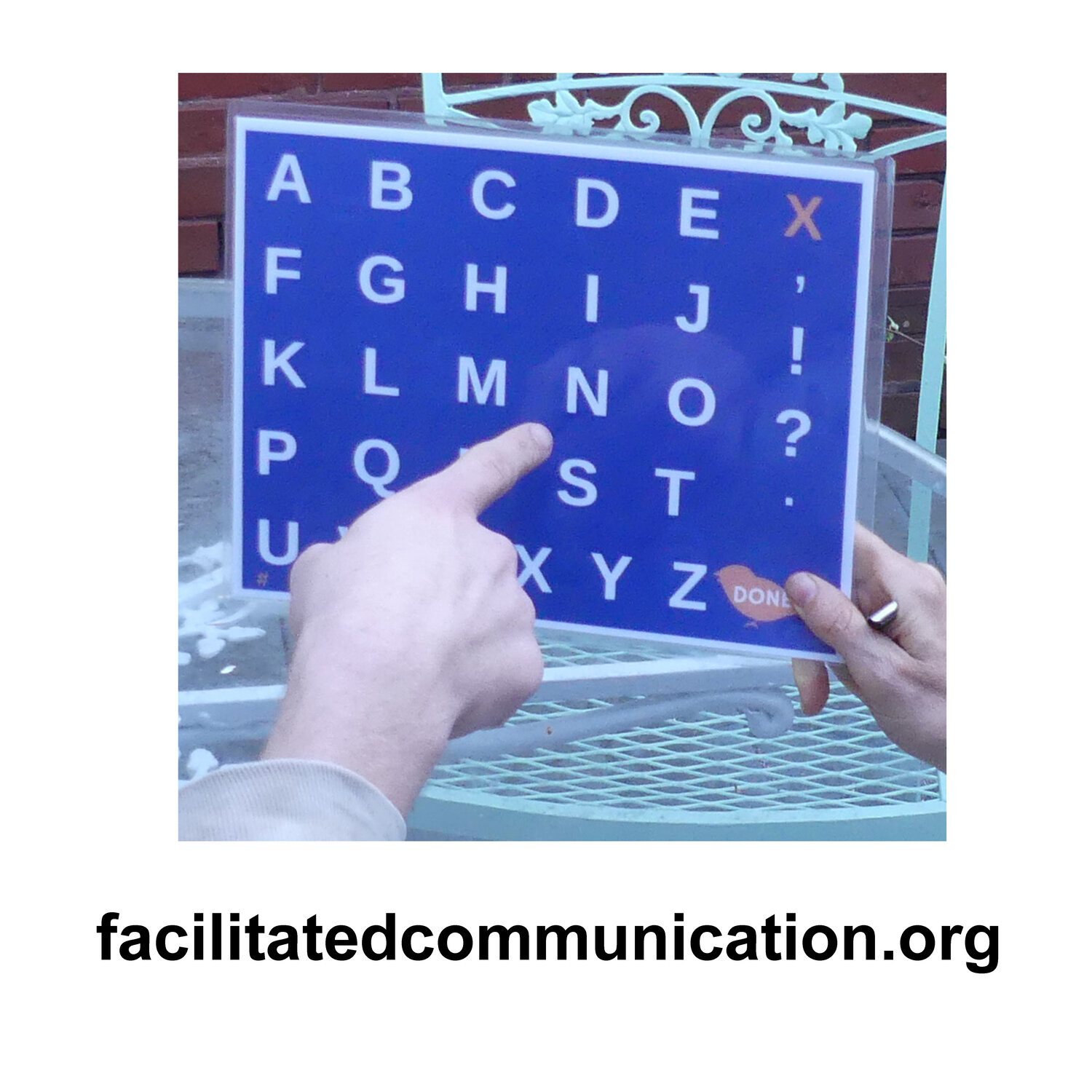
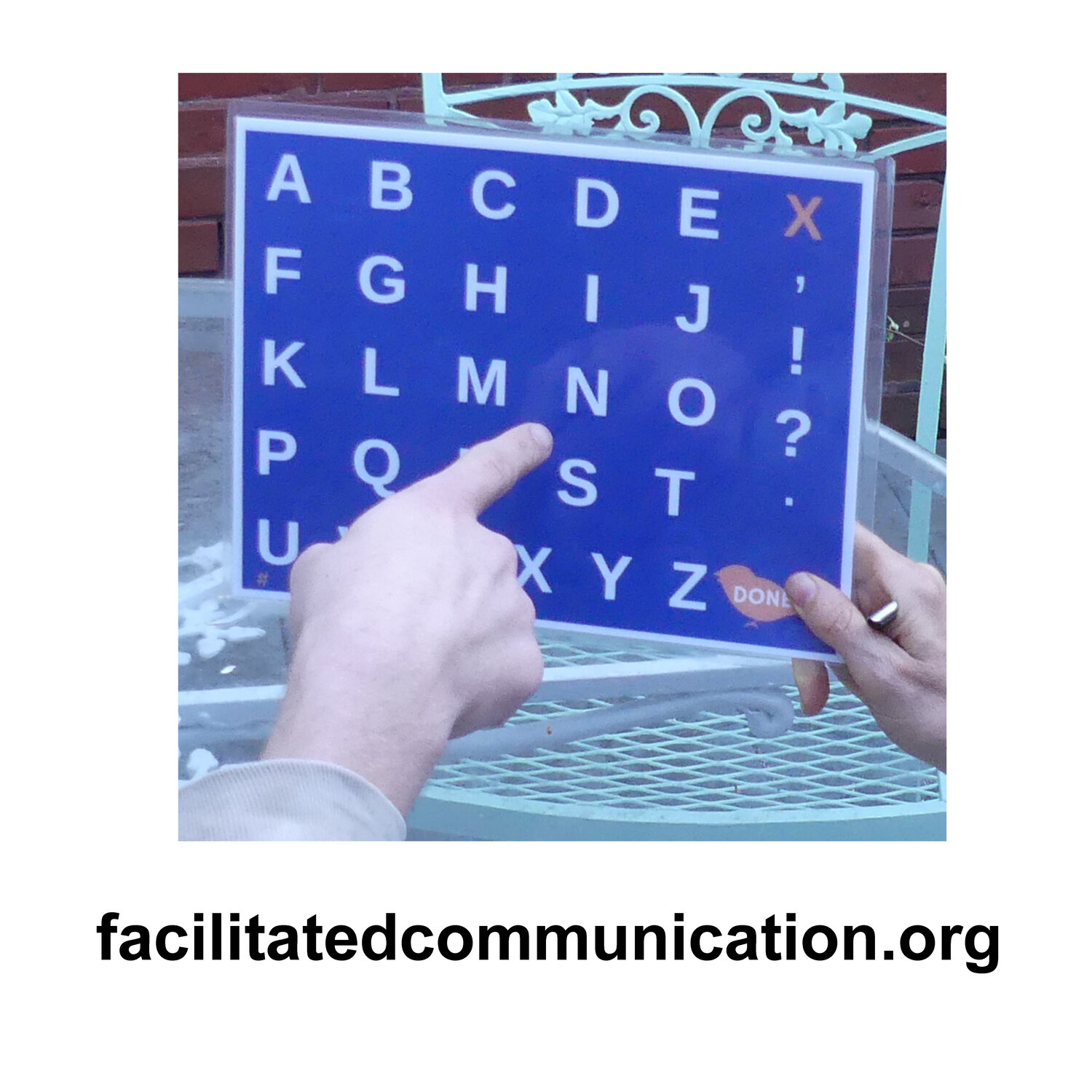
The underlying message, as we’ll see below, is that the motor challenges in non-speaking autism are so extreme that non-speakers are unable to communicate reliably except by pointing to letters on letterboards (for which “text-based interventions” is the code phrase) in the presence of specially-trained communication partners. Even pointing to the stationary pictures of standard language assessments, purportedly, is too much of a motor challenge for non-speakers with autism; for this population, purportedly, only pointing to letters on letter arrays controlled by communication partners is “motor accessible.”
As we’ll also see below, not only is this not supported by plain old common sense; it’s also not supported by autism research, including the autism research listed in the Plan’s references.
Nor should any of this come as a surprise to anyone who remembers the first IACC-related news event back in January, when the IACC’s new public membership was announced. (Half of IACC’s membership are members of the public; the other half are ex-officio federal representatives from relevant federal agencies). The official who made these appointments, Health and Human Services Secretary RFK Jr., has stated that the recent variant of FC known as Spelling to Communicate (S2C) “should be celebrated like the Fourth of July.”
Of the 21 new appointees, two are autistic non-speakers whose contributions to the IACC are generated through S2C or RPM (Rapid Prompting Method, another variant of FC), and at least four are parents who support FC/S2C/RPM. The huge personal and professional investment in FC by nearly one-third of IACC’s public membership is evident, in most cases, in the biographies listed on the IACC website:
Elizabeth Bonker is described as the Executive Director of the pro-FC advocacy organization Communication4All, as having “learned to type to communicate when she was 5 years old” and as “featuring in the documentar[y] SPELLERS,” a documentary about S2C. (Elsewhere she is described as typing through the variant of FC known as Rapid Prompting Method or RPM).
Caden Larson is described as “a young adult non-speaker with autism” who “couldn’t communicate for 20 years” until “Spelling to Communicate changed his life” and “he was able to tell the world that he understood everyone his entire life.” Larson also features in SPELLERS, and his mother runs the S2C business Holland Spellers.
Krystal Higgins is described as “a certified Spelling to Communicate (S2C) practitioner” and as “a devoted mother to an adolescent with complex medical needs.”
Katie Sweeney is described as having “a profoundly autistic, non-speaking” adult son who “[a]fter decades without a reliable means to express his thoughts, wants, feelings, and needs,... now uses spelling-based communication.”
Then there are the two who aren’t described as FC proponents on the website, but whose investment in promoting FC is immediately evident via Google:
Honey Rinicella describes herself elsewhere as the mother of a non-speaker who is subjected to FC/RPM/S2C (see here).
Sylvia Fogel, listed as the Chair of the IACC, stated, in an interview shortly after being appointed, that the IACC will “be focused on investigating or hoping to recommend more research around novel communication methods like typing and spelling for those with minimally verbal or nonverbal autism.” (“Typing” and “spelling” are common code words/shorthands for variants of FC).
I’ll begin by discussing the Plan’s FC-friendly claims and FC-promoting recommendations; then I’ll turn to its evidence base—the studies it lists in its Reference section—and discuss what the most relevant of these studies actually show.
The two most concerning sections are “Motor Planning, Praxis, Sensorimotor Integration, and Apraxia” and “Improving Communication and Access for Nonspeaking and Minimally Speaking Autistic Individuals.” I’ll begin with the first.
“Motor Planning, Praxis, Sensorimotor Integration, and Apraxia”
This section moves quickly beyond a non-controversial observation about motor differences in autism:
Motor differences are widely reported in autism, including impairments in balance, gait, coordination, fine motor control, imitation, praxis, postural control, visual-motor integration, oral-motor function, and speech-motor planning. (p. 157)
to a much stronger claim about “whole body apraxia”:
The term "whole body apraxia" is increasingly used within the autism community and by some occupational therapists to describe the observation that motor-planning difficulty in profound autism often extends beyond speech to affect limb movement, self-care, feeding, mobility, and functional independence simultaneously. This is not a standardized clinical diagnosis; the established literature describes these presentations using region-specific classifications (limb apraxia, oral apraxia, childhood apraxia of speech) or the broader constructs of dyspraxia and motor-planning impairment. However, the underlying clinical concern — that apraxia in autism is not confined to speech and affects the entire body — is supported by studies demonstrating that praxis deficits in autism span gestural, postural, and whole-body domains. (p. 157)
The problem is that the term “whole body apraxia” is only used by a subset of the autism community, namely, the pro-FC sub-community, and it is used by that sub-community not just to characterize motor problems that affect the entire body, but to characterize mind-body control problems that are so great that they prevent those who have them from getting into a car, or reaching for a cup when thirsty.
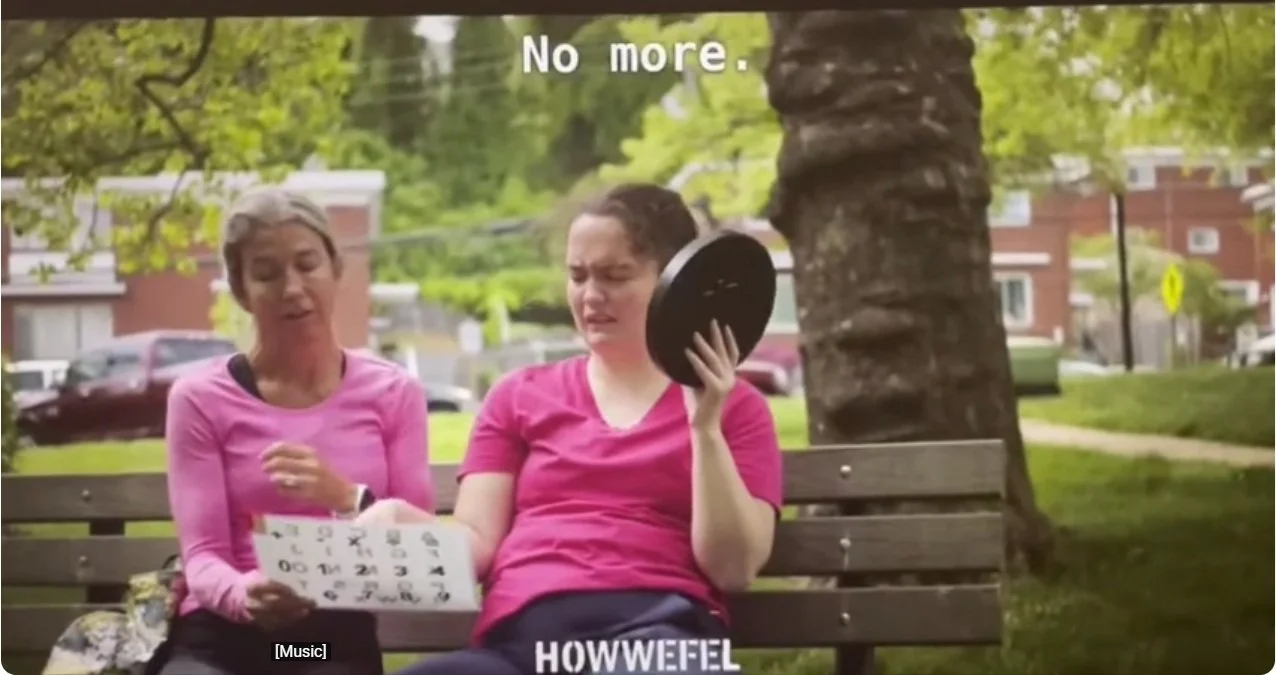
A screenshot of a scene from the movie The Reason My Jump in which we are told that we shouldn’t believe the words that come out of the mouths of minimal speakers with outism. According to FC proponents, “whole body apraxia” purportedly makes speech unreliable.
This section of the Plan also leaps from the noncontroversial statement that:
Praxis difficulties have been demonstrated in autistic children, including impaired performance and recognition of skilled gestures, motor planning differences, and difficulties with imitation and gesture production. (p. 158)
to the unsupported claim that:
Motor initiation — the ability to begin a planned movement — may be independently impaired (p. 158)
In fact, there’s no evidence in any of the studies referenced in the Plan that autistic individuals have trouble initiating planned movements.
This section also claims that “Speech-motor impairment is likely a major and under-recognized contributor to limited speech” (p. 157). Here the Plan cites one study (Maffei et al. 2024), but omits other studies that contest the claim (e.g., Cabral et al., 2021).
The Plan goes on to assert, repeatedly, that these motor impairments cause autistic non-speakers to be underestimated by standardized tests, including tests of receptive language ability. But the only motor skill that receptive language tests require is pointing (as in “Point to the picture of the airplane”). And while the Plan repeatedly inserts “pointing” into lists of known motor impairments that, it claims, affect performance on cognitive and receptive-language assessments, it provides no evidence that non-speakers with autism actually have a motor-based difficulty with pointing to things. The Plan also claims that motor challenges in non-speaking autism may make certain communication tools inaccessible, but most standard AAC devices only require pointing to items on screens or, in the case of PECS, picking up laminated picture cards. The Plan provides no more evidence that non-speakers have trouble picking up laminated cards than it provides evidence that non-speakers have trouble pointing to items on screens—i.e., no evidence at all.
Moving on to implications for research, the Plan claims that past research was insufficiently inclusive of non-speakers and warped by those standardized tests that purportedly underestimate their comprehension skills. It states that, going forward, federal studies should use measures that don’t require “reliable motor output,” and once again wrongly cites pointing skills (among others) as a motor challenge that could cause studies to underestimate comprehension.
Particularly concerning is the Plan’s stipulation that research should require “accessible procedures” and “outcome measures that separate comprehension from,” among other things, “speech [and] pointing” (p. 160). While it’s not yet clear what these “accessible procedures” are, by the time you get to the end of the Plan, there’s little doubt, and the specter of studies that draw conclusions about autistic non-speakers based on FC-generated output is a horrifying prospect, both for science (i.e., the reliability of autism research) and for the communication rights of non-speakers (i.e., the likelihood, based on all the available evidence, that FC and variants replace the communications of non-speakers with the communications of their unwitting facilitators).
At this point the Plan calls for more research on “praxis intervention,” “motor-learning approaches,” and “assistive technology”, that “separate[s] comprehension from motor output where possible” (p. 161). Nowhere does it mention message-passing tests—straightforward, low-cost procedures that would quickly settle questions of facilitator influence.
At the same time, the Plan emphasizes that interventions for non-speakers should not await research findings: “A child who cannot access a device because of motor planning... [or] fine-motor difficulty... does not need a research biomarker before the access problem is addressed.” (p. 161)
Accordingly, the Plan calls for the publication of training materials that teach clinicians to separate motor problems from language comprehension and cognitive skills—which, given what it has already said on this subject, presumably involves mis-teaching clinicians that non-speakers perform poorly on standard receptive language tests because of a motor-based problem with pointing to things.
Finally, the Plan calls for Medicaid to issue guidelines for funding of what it calls “medically necessary supports,” including motor supports and assistive technology supports, which, especially given what comes next, sounds like a demand for Medicaid-funded FC.
The section closes with a list of measures for attainment of these and other goals. Measures include:
“Percentage of participating clinical systems using a motor-access and differential-assessment pathway for motor planning, praxis, motor speech, feeding, oral-motor, handwriting, posture, gait, assistive technology, or durable-medical-equipment needs.” (p. 164)
“Percentage of individuals with an indicated motor or communication-access need” who get access to, among other things, “assistive technology.” (p. 165)
“Number and percentage of federally funded studies that” among other things include “adaptive procedures that reduce motor-output exclusion.” (p. 165)
“Percentage of participating systems using differential motor-access assessment.” (p. 166)
“Adoption of ... motor-minimized assessments in federally supported studies.” (p. 166)
All of this sounds like coded language for spreading FC and variants into research and practice and making them standard accommodations for autistic non-speakers. The Plan’s next section makes this more explicit.
“Improving Communication and Access for Nonspeaking and Minimally Speaking Autistic Individuals”
This section repeats the key claims about motor difficulties in autism: the prevalence of motor challenges in non-speaking autism; the faulty notion that these challenges include difficulty with pointing; the purported ways in which motor challenges cause the comprehension and cognitive skills of this population to be underestimated; the need to build “motor-minimized assessments” so as “to stop underestimating” this population, including in research studies; and the need to train clinicians accordingly.
But the main focus of this section is on access to motor-minimized communication tools, and the underlying assumption is that the existing evidence-based communication tools, of which the most common are speech-generating devices in which users point to pictures and icons (and sometimes words and letters) on screens to generate messages, are somehow not motor-accessible. But the only motor skill involved in using such devices is pointing, and despite what the Plan keeps suggesting, there is no evidence that non-speakers have a motor-based problem with pointing. In fact, many non-speakers not only have no trouble pointing to pictures on these devices to make basic requests; many of them also have no trouble pointing to letters and symbols on other electronic devices to navigate YouTube.
Interestingly, the Plan equivocates a bit on what “access” means, at one point going beyond “motor access” to preference: “Access refers to the ability to use an individual’s preferred modality of communication” (p. 199). Unfortunately, “preferred method of communication,” like “global body apraxia,” has a specialized meaning in the world of FC, where FC users generate messages about their preferred method of communication through FC. The preferred method, of course, is FC, and the preference for this method, as all the available evidence indicates, is expressed not by the non-speakers, but by the people who have chosen the method for them: their facilitators. The determination of an FC user’s “preferred method of communication,” in other words, is as invalid as it is circular.
One of the Plan’s core objectives in this section seems designed to counter the influence of institutions like the American Speech-Language Hearing Association (ASHA), which have position papers recommending that FC and variants not be used with non-speakers:
Protect established access against categorical, method-based exclusions by anchoring federal policy in individualized effective-communication” (p. 200)
...
Nonspeakers should not be categorically barred from using an AAC method, including but not limited to text-based methodologies, communication support, or communication partner arrangement in federally funded or public programs. (p. 203)
In light of the Plan’s definitions of “access,” “individualized effective” presumably reflects the alleged “preferred method.”
More evidence that the “preferred method” is FC comes from the Plan’s criticisms of standard AAC. Following the example of FC promoter Vikram Jaswal, the Plan faults standard AAC tools for limiting users to simple requests and not allowing “the fuller range of communication,” which includes “describing internal states” and “participating in health care and other decisions.” No matter that the standard AAC tools include screens with letter arrays that place no restrictions on messages, and that the chief factors limiting message production in non-speaking autism, including messages about “internal states” and healthcare decisions, are those relating to language comprehension. To communicate a message, you need to understand the words you’re using.
The Plan notes, further, that
many individuals and families report that conventional methods — including PECS, speech-generating devices, and sign language — have not produced functional communication, and that text-based methods provide access where standard approaches did not. (p. 200)
Text-based methods provide access where standard approaches did not: it’s here that the Plan starts betraying what it means by “text-based methods.”
Text-based access, it continues, “can be transformative for many.” Furthermore, “[t]ext-based and letter-based communication approaches are used by a substantial and growing number of nonspeaking individuals who report meaningful benefit.” And in case you’re still wondering, “These methods typically involve a trained communication partner — a person, often a parent, aide, educator, or clinician, who supports another individual’s communication.” (p. 201)
Text-based access, in other words, isn’t the letter array on a standard AAC device, but the letter array on a letterboard held up by a “communication partner”—today’s term for an FC “facilitator.” Somehow, only the latter allows full motor access, even though both methods involve pointing to letter targets, and even though letter arrays held up by other people move those letter targets around more unpredictably than letter arrays on standard AAC devices (which are generally placed on stationary surfaces, or held up by the person using them).
Curiously, we’re never told exactly what communication partners do, but the implication is that they improve “motor access” by addressing the purported difficulties that non-speakers have with pointing. The most the plan says about their role is this:
Emerging research on caregiver-child physiological co regulation suggests that communication partners may help stabilize arousal and create conditions under which motor planning, volitional motor control and communication become more accessible” (p. 202)
Incidentally, in case it isn’t completely clear at this point what “text-based communication” means, in the section of the References entitled “Text-based and letter-based communication methods,” seven of the eight articles are about FC and variants. Oddly, the choice of articles shows some balance. Besides the usual two by Jaswal (the “eye-tracking” study and the “literacy study”), we find the two responses to those papers by yours truly (this one and this one), as well as the American Speech-Language Hearing Association (ASHA) position statement against FC.
Repeating a theme from the Motor section, the Communication Access section emphasizes that non-speakers should not have to wait for research in order to obtain their “individualized effective-communication”:
While evidence is emerging, that absence should not be represented or considered equivalent to proof of ineffectiveness or evidence of invalidity... While that evidence is developed, public programs should respect individualized decisions about communication methodology and should not impose categorical, method-based exclusions.” (p. 201)
Of course, proof of effectiveness or ineffectiveness doesn’t involve long wait times: just the time it takes to ask the non-speaker to describe some pictures that their facilitator didn’t see. But, again, nowhere in the Plan are authorship tests or message-passing tests even mentioned.
Instead, we learn that
Communication access is a civil right and honoring it does not require any federal agency to endorse a specific method” p. 201
The Plan does not mention that part and parcel of honoring—and upholding—communication rights when “text-based methods” involving “communication partners” is concerned is determining whether the communication partners are controlling the messages, as all the available evidence suggests they are.
Moving on to federal research priorities, the Plan includes:
“investigate and develop approaches to support a fuller range of functional... and nuanced communication” including, again “describing internal states; expressing opinions... and participating in healthcare and other decisions.” (p. 201)
An unrealistic goal, given the language comprehension challenges in non-speaking autism.
“comparative-effectiveness studies of the full range of interventions, including text-based methods; motor-communication and dyadic development research, including autonomic co-regulation; emerging technology-assisted communication.” (p. 205)
“Comparative-effectiveness studies” presumably don’t include message-passing tests, but “emerging technology” suggests that more funding is on the way for Jaswal and his virtual-reality projects, this time coming from American taxpayers.
The Plan also calls for federal research dollars to be spent on communication partners, their training, and the motor support they provide, and, once again invoking pointing as a motor problem in non-speaking autism, on “motor-minimized cognitive and receptive-language assessment tools.”
Additional taxpayer dollars should go to
Evaluate emerging technological approaches — including eye tracking, motion capture, computational linguistic analysis, physiological monitoring, EEG, neural imaging, virtual reality, artificial-intelligence assisted communication tools, and brain-computer interfaces where appropriate — for use in functional communication and as diagnostic tools, outcome measures, tracking tools, and as potential strategies for interventions.” (p. 205)
This smells like more funding, not just for Jaswal and colleagues, but for Morgan Barense and Alexandra Woolgar. More funding, that is, for measuring language comprehension indirectly, through uncomfortable equipment and noisy brain signals, rather than directly, through standard assessments where the person is simply asked to point to stationary pictures of trucks, etc.
In discussing the danger of underestimating non-speakers via tasks that involve pointing to stationary pictures, this section implicates not just the standard assessment tools, but also the standard communication tools. Federal research, therefore, should also “examine whether current communication... methods systematically underestimate Nonspeaking and other autistic individuals.” And inasmuch as federal research requires that non-speakers be given access to “motor-minimizing,” “text-based” methods with “communication partners,” that research will almost certainly establish that non-speakers with autism have much higher receptive language skills than previously thought—with vocabulary levels that far exceed those of my moderately autistic adult son and all his Level 2 peers. Enacting the Plan, therefore, will almost certainly revolutionize what “research” concludes about non-speaking autism.
Once again evoking the ASHA position statement against FC, the Plan also pushes for Medicaid funding for “text-based” communication-partner assisted methods:
Analyze Medicaid access barriers for communication-access needs — ... identify state policies that categorically exclude communication methods, and issue guidance clarifying coverage of medically necessary communication-access supports and that Medicaid HCBS and self-directed budgets may not categorically exclude a method without an individualized, person-centered determination. (p. 206)
The Plan proceeds to justify lived experience as evidence and as grounds for funding, claiming that, in the purported absence of research evidence, and given the as-yet still emerging research, it’s enough that “individualized, experience-based evidence suggests the method is effective” for those using it. (p. 203). Elaborating, it states:
The federal standard is individualized assessment: whether the communication support is effective for the person, in the relevant setting, for the communication task at issue, and whether reasonable alternatives would provide equal access.
Where FC and variants are concerned, the judgment of whether the communication support is effective for someone comes from those who chose FC for the person, who ipso facto are convinced that it’s effective and that no alternative would provide “equal access.”
The Plan assures us that “This does not require any federal agency to endorse a particular AAC method, resolve scientific controversy, or fund services outside applicable program authority.” But the implication, nonetheless, is that Medicaid should fund it in specific instances:
CMS [Centers for Medicare & Medicaid Services] should apply the same individualized standard in Medicaid; and HHS [Health and Human Services] should coordinate with DOJ [Department of Justice] and the Department of Education so that communication access follows the individual across settings. (p. 203)
In particular, the HHS Office of Civil Rights is directed to:
Issue effective-communication guidance requiring individualized assessment of communication supports for Nonspeakers and establishing that a Nonspeaker may not be categorically barred from an AAC method, including text-based communication methods, communication support, or communication partner arrangement in a federally funded or public program, and addressing method-based exclusions. (pp. 206-207)
And the Department of Education is directed to:
Coordinate to align federal communication-access expectations across healthcare, disability services, schools, community programs, and public accommodations, so that communication access follows the individual across settings and is not narrowed by fragmented funding streams or setting-specific exclusions, including appropriate cross-references addressing communication access under IDEA, AAC in schools, and assistive technology. (p. 207)
In other words, with the pro-FC judgments of those who choose FC and variants deemed sufficient evidence, multiple agencies are called on to support FC across a variety of settings.
The Plan’s measures for accountability include:
Percentage of nonspeaking and minimally speaking individuals receiving a comprehensive individualized communication and motor-access evaluation and coverage for the selected support.
Percentage of federally supported studies using motor-minimized assessment
And its “Implementation Standards” include:
Nonspeakers, including AAC users, should be involved in design, testing, implementation, and evaluation [with the evaluations of FC users presumably expressed through FC-generated message]
Access should be tailored to the individual rather than categorical [i.e., facilitator judgments trump hard evidence]
I’m tempted to stop here and simply remind you of the email address for public comments on this document: IACCPublicInquiries@mail.nih.gov. But the Reference section, ironically, does so much more to undermine the claims made by the Plan that it’s worth dissecting it as well.
References
The references include many good studies on motor delays and differences in autism and on the various areas of difficulty (some of which we’ve discussed elsewhere on this website, like Bhat (2021)). Many studies find higher error rates in performing, imitating, and/or pantomiming motor functions like stirring tea, hammering a nail, using a toothbrush, cutting with scissors, zipping and buttoning a jacket, using a finger to complete a maze on a Smartboard, and drawing shapes (de Marchena et al., 2023; Dziuk et al., 2007; Kangarani-Farahani et al., 2024; Kilroy et al., 2022; Simarro et al., 2024). One study details areas of motor weakness, fine- and gross-motor inaccuracy, and challenges with balance and gait—but also suggests that individuals find ways to compensate (da Silva et al., 2025). There are also several papers that find ocular-motor differences, specifically abnormal/impaired saccade movements. However, while all this amounts to clear evidence for motor delays, inaccuracies, and inefficiencies, and a need to compensate, it does not amount to support for the kind of “whole body apraxia” claimed by FC proponents: a condition that purportedly gives those afflicted so little control over their bodies that only their FC-ed communications show their actual feelings, thoughts, goals, and understandings.
We also find a couple of studies on motor impulsivity and motor inhibition (e.g., Tonizzi et al., 2022): traits which the Plan claims contribute to underestimated ability. But there isn’t a single study on the other motor-based trait it consistently lists along with impulsivity and inhibition: difficulty with initiation. In other words, the Plan provides no evidence that non-speakers have motor initiation difficulties that cause people to underestimate their abilities.
Importantly, many of the motor papers find a correlation between motor difficulties and either language comprehension or IQ. On motor difficulties correlating with language comprehension difficulties we have Butler & Tager-Flusberg (2023), Lin et al. (2026), Mody et al. (2017), and Simarro et al. (2024). On oral-motor difficulties in particular (speech apraxia) correlating with language comprehension difficulties we have Maffei et al. (2024). On motor difficulties correlating with lower IQ we have Bhat et al. (2022), Kaur et al. (2018), Lin et al. (2026) and Ramos-Sánchez et al. (2022).
Of course, the authors of the Plan, like FC proponents, would surely dismiss these findings via their repeated claims that motor difficulties impede the performance of autistic individuals on standardized tests. But these tests don’t involve the kind of complex motor skills that studies find challenging in autism; they generally merely require pointing, and none of these studies show evidence for a motor-based pointing deficit.
The authors do cite one paper that purportedly supports the notion that standardized assessments underestimate this population: Courchesne et al. (2015), a paper commonly cited, and misrepresented, by FC proponents. This paper finds that speaking autistic children performed better on cognitive measures that don’t require language skills than they do on standard IQ tests. Such non-language-based measures include the Raven’s Colored Progressive Matrices board form (RCPM), which measures visual pattern recognition. However, even though the autistic non-speakers in the study did better on these tests than on standard IQ tests, they still did much worse than age-matched neurotypicals (see my discussion in this post). Furthermore, the alternative tests weren’t the kinds of motor-minimized tests that the Plan is calling for; instead, they were language-minimized tests (which make much more sense for assessing this population, since it bypasses a real issue that interferes with accurate assessments of nonverbal cognitive skills, namely, receptive language difficulty—as opposed to an imaginary issue, namely purported difficulty pointing to things).
The only paper in the References that suggests a motor-based pointing deficit is Belmonte et al. (2013). But this paper merely asserts the existence of such a deficit and provides no evidence for it (see my critique here). That’s not to say that there isn’t diminished pointing in autism—there is—but pointing isn’t just a motor skill; it’s a social skill, which is why people rarely, if ever, point to things (other than buttons on machines) when they’re all by themselves. It is, therefore, the known social deficit in autism that is the most obvious reason for diminished pointing; not an imagined, undocumented motor deficit. As for the idea that motor issues—e.g., pointing to buttons on machines—interfere with access to communication in autism, the papers the Plan references, Sowers et al. (2023) and Sowers and Wilkinson (2024) aren’t about autism, but, rather, about disabilities that actually do involve significant motor issues. As I noted earlier, many autistic non-speakers not only have no trouble pointing to pictures on AAC devices to make basic requests; they also have no trouble pointing to letters and symbols on other electronic devices to navigate YouTube. And yet, according to the Plan, making them point to stationary letters that inevitably move around unexpectedly on letterboards held up by other people is somehow more motorically accessible.
The paper most relevant to the question of motor demands (Kenworthy et al., 2013) finds that increased motor demands on a visual perception task disproportionately impede children with autism. But nowhere in the Plan is it ever explained how the recommended text-based methods with communication partners reduce motor demands—as opposed to increasing them.
As for motor initiation, the only study that the authors list, in a reference category entitled “Praxis, dyspraxia, coordination, and motor variability,” is Carmo et al. (2017). However, this study has nothing to do with the sort of motor-based initiation difficulties the Plan is attributing to non-speakers. Instead, it finds that high-functioning autistic individuals had more difficulty than non-autistic controls in a semantic task: namely, coming up with words that belong to a given category like Kitchen Utensils and Clothing. (In the first 15 seconds of the task, the high-functioning autistic individuals had more difficulty than the non-autistic controls in coming up with words that fit the given category.)
In other words, there is no evidence here about (1) pointing difficulties (2) initiation difficulties or (3) whole-body difficulties that explain the key claims the Plan makes about non-speakers: the claims about underestimated language and cognitive skills; about the need for a communication partner; and about the failure of most FCed individuals to initiate communication by picking up their letterboards themselves. Nor is there any evidence here that explains why the body language of non-speakers, including in some cases even the words they speak, is often at odds with their facilitated typing.
Finally, the References include two papers that find that neither traditional early intervention nor traditional AAC do much to improve communication in non-speaking autism (Rose et al., 2016; Brignell et al., 2018). But such shortcomings are less likely a function of problems inherent to the interventions themselves than of the low comprehension and cognitive skills in non-speaking autism discussed in the many papers listed above, as well as in two additional ones listed here: Bal et al. (2016) and Guerrera et al. (2025).
On that note, let me remind readers once again of the email address for submitting public comments on the plan, due by August 20th: IACCPublicInquiries@mail.nih.gov.
REFERENCES
Bal, VH, Katz T, Bishop SL, Krasileva K. Understanding definitions of minimally verbal across instruments: evidence for subgroups within minimally verbal children and adolescents with autism spectrum disorder. J Child Psychol Psychiatry. 2016;57(12):1424-1433.
Belmonte MK, Saxena-Chandhok T, Cherian R, et al. Oral motor deficits in speech-impaired children with autism. Front Integr Neurosci. 2013;7:47.
Bhat AN. Motor impairment increases in children with autism spectrum disorder as a function of social communication, cognitive and functional impairment, repetitive behavior severity, and comorbid diagnoses: a SPARK study report. Autism Res. 2021;14(1):202-219.
Bhat AN, Boulton AJ, Tulsky DS. A further study of relations between motor impairment and social communication, cognitive, language, functional impairments, and repetitive behavior severity in children with ASD using the SPARK study dataset. Autism Res. 2022;15(6):1092-1110.
Brignell A, Chenausky KV, Song H, Zhu J, Suo C, Morgan AT. Communication interventions for autism spectrum disorder in minimally verbal children. Cochrane Database Syst Rev. 2018;11(11):CD012324.
Butler LK, Tager-Flusberg H. Fine motor skill and expressive language in minimally verbal and verbal school aged autistic children. Autism Res. 2023;16(8):1569-1582.
Cabral, C., & Fernandes, F. (2021). Correlations between autism spectrum disorders and childhood apraxia of speech. European Psychiatry, 64(S1), S209–S209. https://doi.org/10.1192/j.eurpsy.2021.557
Carmo JC, Duarte E, Souza C, Pinho S, Filipe CN. Brief report: testing the impairment of initiation processes hypothesis in autism spectrum disorder. J Autism Dev Disord. 2017;47(4):1256-1260.
Courchesne V, Meilleur AA, Poulin-Lord MP, Dawson M, Soulières I. Autistic children at risk of being underestimated: school-based pilot study of a strength-informed assessment. Mol Autism. 2015;6:12. doi:10.1186/s13229-015-0006-3
da Silva SH, Felippin MR, de Oliveira Medeiros L, Hedin-Pereira C, Nogueira-Campos AA. A scoping review of the motor impairments in autism spectrum disorder. Neurosci Biobehav Rev. 2025;169:106002.
de Marchena A, Zampella CJ, Dravis Z, Pandey J, Mostofsky S, Schultz RT. Measuring dyspraxia in autism using a five-minute praxis exam. Res Autism Spectr Disord. 2023;106:102200. “praxis, the ability to perform learned skilled movements”
Dziuk MA, Gidley Larson JC, Apostu A, Mahone EM, Denckla MB, Mostofsky SH. Dyspraxia in autism: association with motor, social, and communicative deficits. Dev Med Child Neurol. 2007;49(10):734 739.
Guerrera S, Fucà E, Petrolo E, et al. Exploring the clinical features of minimally verbal autistic children. Front Psychiatry. 2025;16:1549092.
Kangarani-Farahani M, Malik MA, Zwicker JG. Motor impairments in children with autism spectrum disorder: a systematic review and meta-analysis. J Autism Dev Disord. 2024;54(5):1977-1997.
Kaur M, Srinivasan SM, Bhat AN. Comparing motor performance, praxis, coordination, and interpersonal synchrony between children with and without autism spectrum disorder (ASD). Res Dev Disabil. 2018;72:79-95.
Kenworthy L, Yerys BE, Weinblatt R, Abrams DN, Wallace GL. Motor demands impact speed of information processing in autism spectrum disorders. Neuropsychology. 2013;27(5):529-536.
Kilroy E, Ring P, Hossain A, et al. Motor performance, praxis, and social skills in autism spectrum disorder and developmental coordination disorder. Autism Res. 2022;15(9):1649-1664.)
Lin LY, Jin YR, Yu WH, Lai PC, Tu YF. Motor and cognitive profiles in children who are 3 to 6 years old and have autism spectrum disorder and other developmental disabilities.
Maffei MF, Chenausky KV, Haenssler A, Abbiati C, Tager-Flusberg H, Green JR. Exploring motor speech disorders in low and minimally verbal autistic individuals: an auditory-perceptual analysis. Am J Speech Lang Pathol. 2024;33(3):1485-1503 Finds some tentative evidence for CAS in some minimally verbal autistic individuals; it also finds that the CAS correlates not just with expressive language skills, but with receptive language difficulties.
Mody M, Shui AM, Nowinski LA, Golas SB, Ferrone C, O'Rourke JA, McDougle CJ. Communication deficits and the motor system: exploring patterns of associations in autism spectrum disorder (ASD). J Autism Dev Disord. 2017;47(1):155-162.
Ramos-Sánchez CP, Kortekaas D, Van Biesen D, Vancampfort D, Van Damme T. The relationship between motor skills and intelligence in children with autism spectrum disorder. J Autism Dev Disord. 2022;52(3):1189-1199.
Rose V, Trembath D, Keen D, Paynter J. The proportion of minimally verbal children with autism spectrum disorder in a community-based early intervention programme. J Intellect Disabil Res. 2016;60(5):464 477.
Simarro Gonzalez M, Ni G, Lam V, Demopoulos C. Beyond words: an investigation of fine motor skills and the verbal communication spectrum in autism. Front Psychiatry. 2024;15:1379307.
Sowers DJ, Wilkinson KM. Demands associated with an augmentative and alternative communication system in relation to alternative forms of access for individuals with motor impairments. Am J Speech Lang Pathol. 2023;32(1):37-54.
Sowers DJ, Wilkinson KM. Speech-language pathologists' approach to alternative access for augmentative and alternative communication for children with motor impairments. Am J Speech Lang Pathol. 2024;33(2):7
Tonizzi I, Giofrè D, Usai MC. Inhibitory control in autism spectrum disorders: meta-analyses on indirect and direct measures. J Autism Dev Disord. 2022;52(11):4949-4965.
