"And it takes a long hard time to spell out their thoughts. Either they're telling the truth all over the world, or they're in some huge great mass conspiracy to trick us. And I think it's the former. What I resist is the leap from those legitimate concerns to a theory that a collection of people with different politics, religions, professional relationships, or controversial acquaintances somehow demonstrates coordinated deception." – Telepathy Tapes, S2E14
I’m a former spelling communication partner (CP) telepathy enthusiast turned skeptic of both facilitated communication and its variants FC/RPM/S2C/Speller’s Method/etc. and of telepathy, and oddly enough I’m sharing my lived experience. My earlier post (part I) provides the essential backstory. This post (part II) walks through the facilitation in detail from my former perspective, paired with present-day skeptical commentary. Readers who are on the fence may perceive my tone as insensitive, biased, or provocative. I felt the same way back when I first read skeptical writings, and I carried on by assuming some well-meaning intention that I could not yet perceive. My intention: I’m holding myself accountable to science, reality, and communication rights of persons with disabilities. Neither facilitatedcommunication.org nor the American Speech–Language–Hearing Association (ASHA) are paying me to write this.
Readers who believe in spelling (i.e., FC/RPM/S2C/Speller’s Method) may avoid engaging with disconfirming content or respond with ad hominem attacks. I did not feel the same way back when I believed in spelling and first learned that skeptics like Janyce Boynton, Dr. Katharine Beals, Dr. Howard Shane, etc. existed. I falsely assumed they hadn’t kept up with any new evidence and wanted to share my evidence with them one day in the spirit of collaboration.
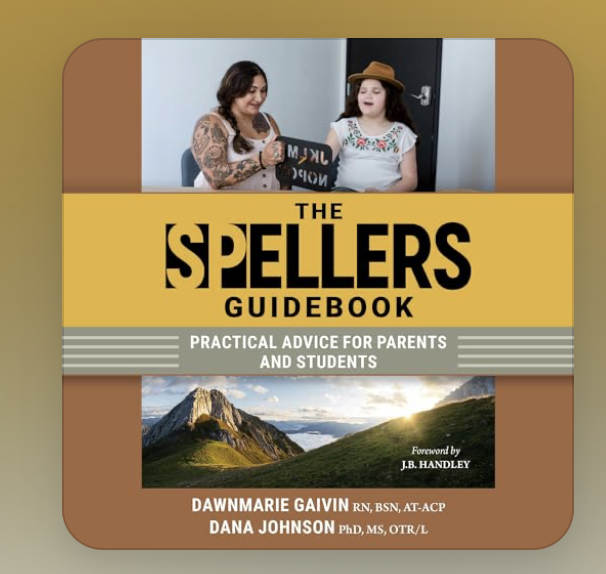
Screenshot of cover of The Spellers Guidebook (2026)
Around mid-November 2025, I decided to support spelling by becoming a communication partner (CP), so I asked the Spellers Community Facebook group for local opportunities to volunteer. A parent kindly invited me to spell with their speller who had been spelling for six years and was well regarded within the community. To make the most out of this unique invitation, I prepared by watching Spellers the Movie and C4A Academy instructional videos; reading The Spellers Guidebook, Underestimated, I Am in Here, and the speller’s blogsite; and getting limited practice with other spellers using both no-touch and touch techniques.
The Spellers Guidebook struck me as more of an informal pamphlet than an exact textbook. I expected to see footnotes and citations of peer-reviewed papers on how spelling works but instead found user testimonials, which gave the false impression that science hasn’t caught up with lived experience. Its most intriguing yet most baffling section was “But My Child Can Already Type To Search YouTube!” Searching on YouTube is just communicating a request or thought, so claiming that it required less cognition and motor support than typing a novel thought is the sort of thing that might have felt to me like neurobabble. But I stopped short of thinking it was neurobabble because I was motivated to help and learn from spellers, not to doubt them. The promotional materials sold me the story that profoundly autistic non-speakers had personally approved spelling already, so I could not yet conceive that helping them might involve double checking spelling myself first.
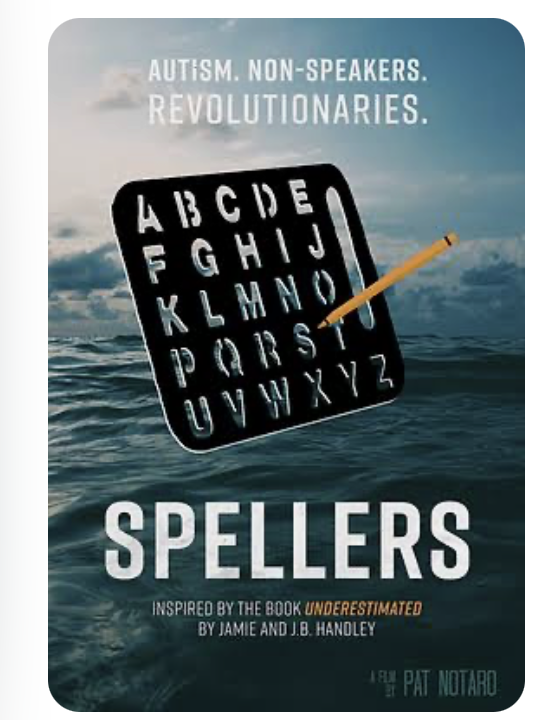
Screenshot of the title page of Spellers the Movie (2023)
A few days after the invitation, I traveled over an hour to a spelling center to observe the speller in a keyboard session for the first time. The experience overwhelmed me as though I were reliving Spellers the Movie. The speller sat in front of a desktop monitor behind a video recorder while their primary CP, seated to their right, held a wireless keyboard steadily in midair. The speller exchanged greetings and conversations with me and two other observers, with each letter typed on the screen materializing as a triumphant miracle. At one point during the spelling, the CP turned her head away for a few seconds to demonstrate that she did not even need to look at the keyboard, which, at the time, confused me as to what this was meant to establish.
We discussed best practices and agreed that spellers should avoid telepathically reading other people’s minds at the risk of spelling out others’ thoughts as their own. I left the session filled with purpose and armed with what seemed like wise advice: All the information is already in the speller’s head, and the CP provides a blank canvas for that information by clearing their mind and being supportively present.
Here are my thoughts now, thinking back on that day from a year ago. My visual recollection of the keyboard being held steady is unreliable because I was not looking for subtle movements; instead, my attention was drawn by each letter appearing on the screen. Moving the board in midair to aid in letter selection is often unconscious and can involve shifts of less than an inch along three axes—up and down, left and right, and forward and backward—as well as tilts about each axis, allowing six degrees of freedom. Holding the board without looking at it for a few seconds to disprove facilitator (communication partner) control is impressive but does not control for tracking the board’s position through mental imagery or muscle memory. Rejecting telepathy and trying to clear one’s mind into a blank canvas neither prevents nor exposes one’s unconscious thoughts.
Moving the board is like steering the wheel of a car on a familiar road. The driver often clears their mind from consciously thinking about the road, drives unconsciously with the direction in the back of their mind, may not register in their mind the physical sensation of steering the wheel, and cannot take their eyes off the road for more than a few seconds. Analogously, the facilitator clears their mind of conscious thoughts in vain, unconsciously authors the message in the back of their mind, may not register the sensation of moving the board, and cannot take their eyes off the board.
Details about my sessions as a CP are as follows.
The parent supervised my first session and assured me that the speller and I could converse back and forth by spelling in no time because they were so experienced with the whole process. In contrast, a new speller may work on spelling for months or years yet still cannot progress from being able to answer closed-ended questions to open-ended questions, colloquially known as “getting open.”
I began by reading a lesson out loud to the speller, stopped at the highlighted word HAT to spell it, and held the keyboard still in front of them. The speller touched “G” without pressing in the key and held their finger still. There was an awkward pause, then the parent took the keyboard to show how it was done. The parent moved the keyboard noticeably and rhythmically within a small area, and the speller typed HAT. I took the keyboard back and tried again, moving it slightly and randomly while watching the speller’s finger for any responses. Sure enough, their finger reached toward “H” but struggled partway against some invisible resistance. I moved the key closer to their finger, and their finger moved in response closer to the key, finally touching “H” but not pushing hard enough to press it in. I nudged the keyboard slightly, and the speller pressed “H.” For the first time, I understood what it was like to be a CP helping with what FC proponents call “apraxia,” or the inability that autistic non-speakers purportedly have controlling their bodies. And by the end of the session, our dancelike technique improved so much and became so routine that I was getting bored with spelling highlighted words from lessons. Whenever the speller took one of their regular 15-minute breaks, the parent and I reflected on the progress with enthusiasm and specificity.
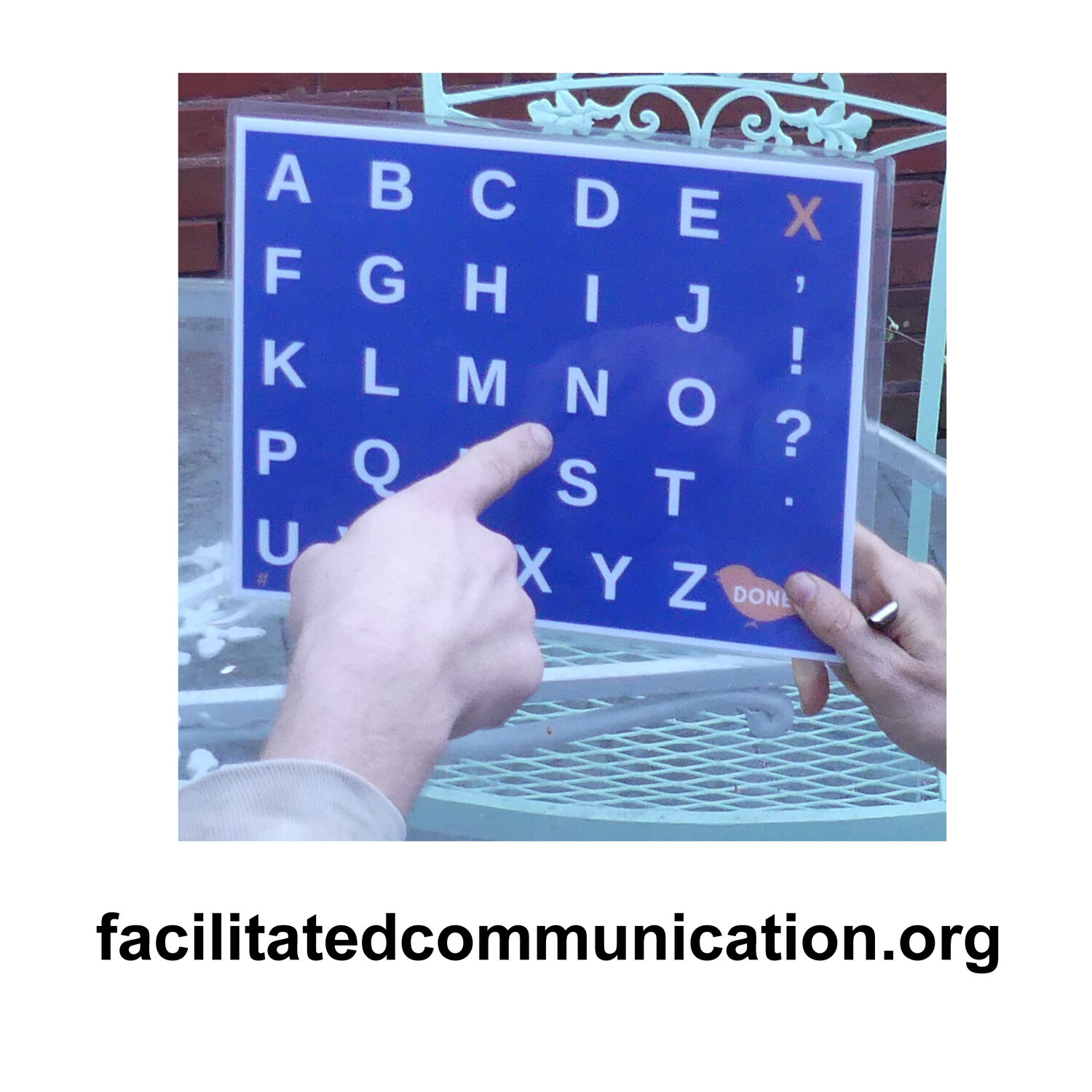
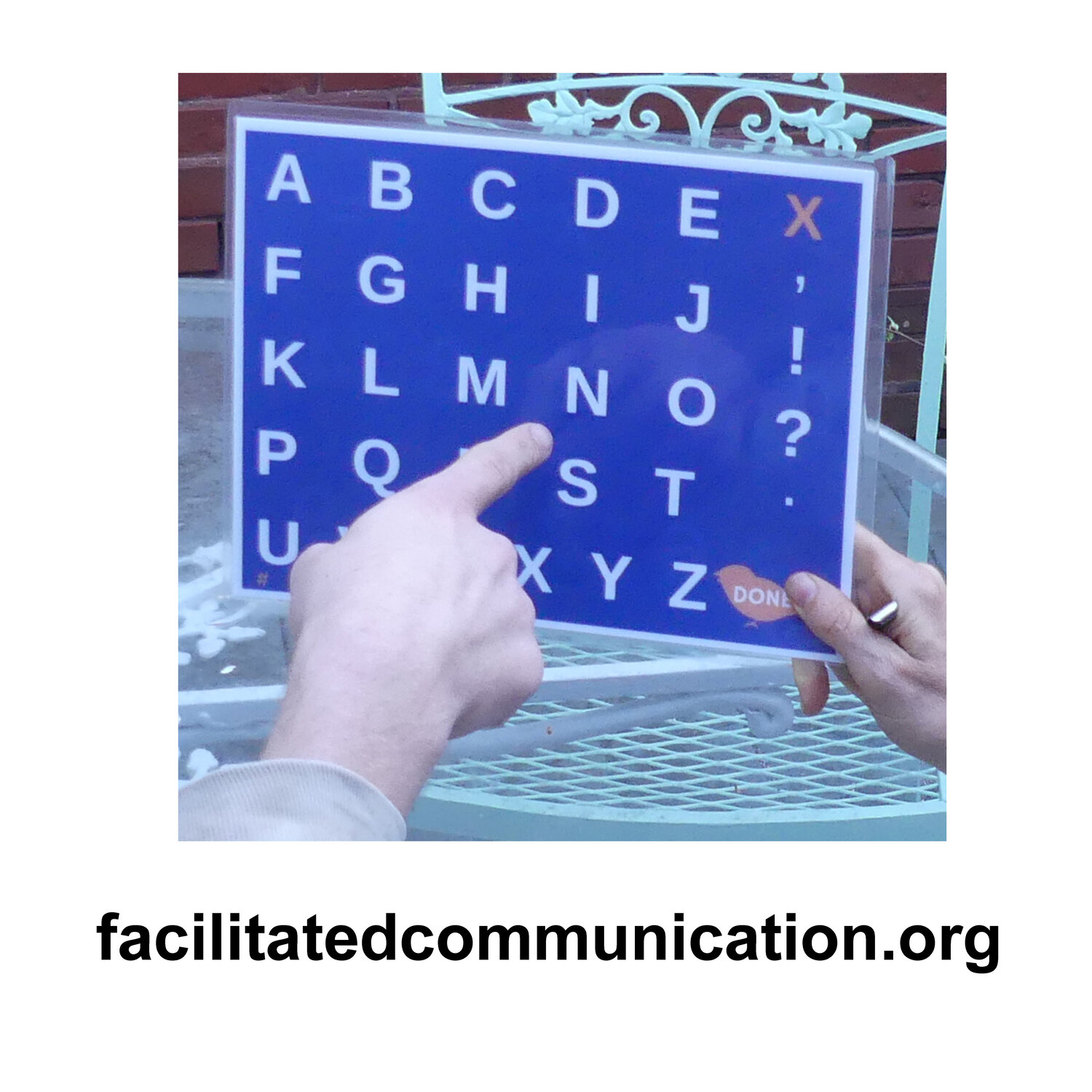
As I look back on this now, I realize that the non-speaker had been trained to reach toward the region of the keyboard that was moving toward their finger, as if the two entities were magnets. For example, using the typical alphabetic letterboard, like this one below, if the starting position is, as it often is, the center of the keyboard, the facilitator would cue P-O-K-E by moving the keyboard right-left-right-left.
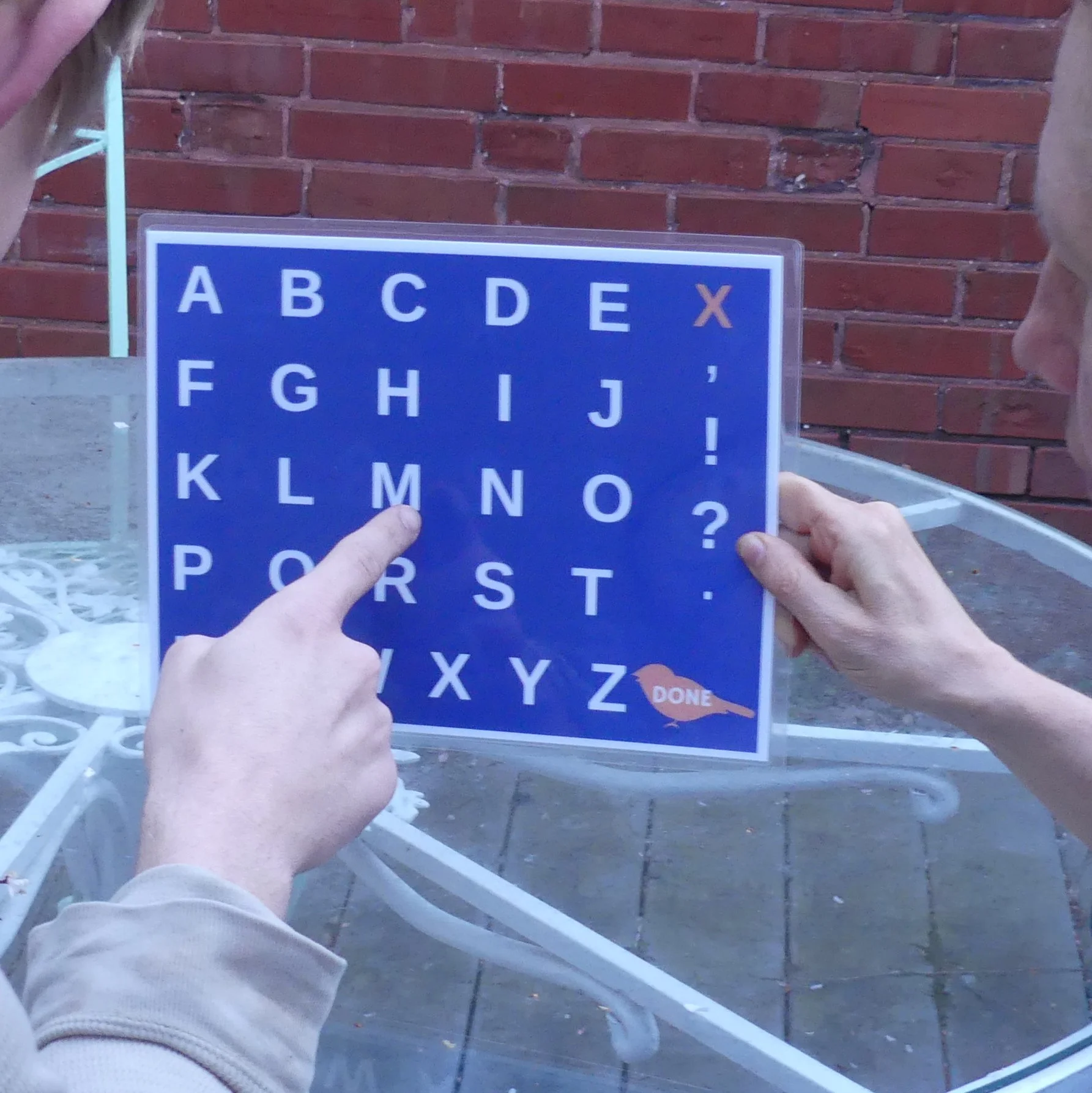
Laminated letter board held in the air by the facilitator while the client extends a finger toward it.
The promotional materials had convinced me that the non-speaker can follow spelling instructions, say “Let’s spell HAT,” so I had moved the keyboard randomly, noticed when their finger reached toward “H,” and ignored the other random reaches. When I had moved the keyboard only partway to cue “H,” I had interpreted the corresponding partway movement by the non-speaker in response as an indication of their allegedly weak, malleable limb strength—purportedly one of the symptoms of apraxia. When the non-speaker had touched “H” and likely waited for the next cue, I had instead imagined that they were waging an internal struggle against apraxia to push the “H” in.
I stuttered very mildly during childhood, but I could never relate to this apparent phenomenon of whole-body-mind stuttering. The respectful way to ask for more information about someone’s disability is to come from a place of support. But the more involved I got in facilitating and with the community, the more I semi-consciously observed the unspoken courtesy of giving spellers the benefit of the doubt and not asking. Meanwhile, progress made from helping with the apraxia amounted to believing that the board moved only a little or not at all: a belief that, I realize now, came from learning, over time, to cue more subtly and attending less to the sensation of moving the board. Once I believed I had become a facilitator, I interpretated the sensation of moving the board as improperly supporting the apraxia and felt too embarrassed to acknowledge it. Some facilitators may get to a point of sensing nothing at all; I, however, could never fade all the sensations away from the back of my mind.
After the second session, I received an impressively long, 15-sentence email of feedback from the speller via their primary CP , which motivated me to set the goal of one day assisting them in writing an equally long message myself. In the email, the speller recommended that I register with them for the online eight-weeks Speller’s Method CP training course and suggested getting open as a goal. But there was one thing that puzzled me: in the first half of the email, the speller was almost apologizing for being dysregulated and uncooperative during the previous two sessions. I didn’t know what they were referring to because we made substantial progress in each session, spelling for over an hour with multiple 15-minute breaks. Dysregulations that I know of and have seen with other non-speakers include intense stimming, self-injurious behaviors, meltdowns, elopement, etc., and none of my sessions exhibited anything close to those. At most, in one session the non-speaker took a longer than usual 30-minute break for a snack and nap. The only explanation I can think of was that the speller had outstanding work ethics and was being too hard on themself.
The part of the email that apologized for dysregulation was, I realize now, a subtle instance of failure to pass a message that at the time went completely over my head. A non-speaker with socio-cognitive disability (i.e., profound autism) cannot, I now know, possibly pass along information about their levels of regulation to another person. The primary facilitator, who facilitated the emailed apology about dysregulation, basically never spoke with me after our first and only meeting and was not present during my sessions. We were effectively “blinded” to each other’s sessions, and only the parents and secondary facilitator were occasionally present during my sessions. So, “dysregulated” and “uncooperative” in the email were based either on something the primary facilitator had heard from the parents and secondary facilitator, or on something that she had thought of independently.
Before we started the third session, the non-speaker kept going outside to sit in a folding chair, so I joined them. They sat cross-legged in their T-shirt and pajamas in the 50°F cold under a clear sky, gazing at birds hopping along the treetops across the driveway. I sat beside them and followed their gaze to see what they were seeing. By then, spelling had turned into a job of thinking about who the speller was and what we could accomplish together. But there, I put our work aside and simply enjoyed the outside through my physical senses, knowing they were doing the same.
We achieved open conversations by the fourth session, and five select conversations from then on are listed below, with footnotes and annotations. There’s nothing new I can express about getting open that hasn’t been trumpeted already by others: in short, it’s proof of a miracle. But I didn’t pause to celebrate; instead, I thought about what I could do to help every non-speaker achieve open. I wanted to share my open conversations with the parents and CPs, though ultimately, I decided not to out of respect for their busy lives.
I. CP (me): Based on the lesson, name an example of a professional.
Speller: THIS IS EASY [1]
C: Is this too easy for you? Is that what you want to tell me?
S: FINALLY A REAL FRIEND [2]
II. C: Do you have a favorite sport?
S: FOOTBALL [3]
III. C: Do you have a favorite subject?
S: MATH [4]
C: Do you have any questions about any math concepts?
S: DALOT [5]
C: Is that a word?
S: CHONGA [5]
C: I don’t know what that means.
S: PEMDAS [6]
C: Ah, please excuse my dear aunt sally! [6]
IV. C: Are we progressing at a good pace?
S: YES
C: I think so too. Is there anything I can improve on?
S: NO
C: Should we set some spelling goals for the near future?
S: YES
C: Do you want to take a break?
S: YES [7]
V. C: Give an example of a weather phenomenon not mentioned in the lesson.
S: DIVERGENCE OF GLACIERS [8]
Notes:
The psychological leap to conversing openly with an imagined persona, also known as the speller, was natural and perhaps accidental. I expected it to happen but was not explicitly instructed or pushed to do so from the lessons. Each lesson ended with an optional open-ended question asking the speller for a free response, but I wasn’t psychologically confident or willing to compose anything new and skipped them. Once cueing predetermined words and multiple-choice answers became easy and tedious, my unconscious thought —“This is easy”—just accidentally slipped out onto the screen. Seeing it appear beneath earlier messages attributed to the speller pushed me to accept the moment as eureka. In hindsight, I’m not sure whether the author of every message was technically me or the fictional persona I had created.
The unconscious mind acts without thinking twice, and the conscious mind can react without tracing back the source of the action. The source of “Finally a real friend” was my aim to be as much of an ally to this individual as I had been to the other non-speaker who had greeted me with the exact same message (see Part I). Consciously, I was shocked by this breach of best practices and rationalized it as mostly my influence and minimally the speller’s telepathy. Back then, asking me to explain how I influenced would have been like asking me how I had misplaced my keys. I knew only that I misplaced them, but explaining how it happened would have required finding them first, jogging my memory, and retracing my steps.
I vaguely recalled the speller talking about football games on their blogsite and guessed “Football.”
The parent invited me to spell partly because my math background was unique among facilitators, and I hoped the speller also liked math.
“Dalot” and “chonga” were pseudowords produced through unconfident facilitator control, stringing consonants and vowels together on the fly without a message ready.
PEMDAS and "Please Excuse My Dear Aunt Sally" are mnemonics for the order of operations in math.
The yes/no responses reflected not only the leading nature of my questions but also my brief and to the point writing style.
The lesson’s question reminded me of a good friend who studies weather, motivating me to compose more than one word.
Here comes the breakthrough moment, the turning point from belief to skepticism. On January 5th as I was getting ready for the first course of the Speller’s Method CP training, out of nowhere the parent texted me that the speller wanted to take a break from our sessions. It was a classic moment of having the rug pulled from under—whiplash from setting spelling goals one day to having no speller to work with the next, and a speller was mandatory for the training. I reacted by suspecting that the speller suffered from multiple personality disorder or amnesia, but quickly dismissed the suspicion as an excuse to not blame myself for doing something wrong. I don’t know what I did wrong though and felt like a disposable failure, which influenced me to ask myself a simple question: Had any other facilitator had a bad experience and spoken up about it?
The key to the breakthrough moment, the turning point is this: I experienced the consequence of failing to pass a message-passing test. I had unconsciously created a persona and attributed messages to them that communicated that they wanted to spell with me. Everyone else was blinded to that information, and the non-speaker could not possibly have communicated to others that they wanted to spell with me. The primary facilitator had subsequently authored the contradictory message that the non-speaker wanted to take a break. At the time I could only resolve the contradiction by discovering the phenomenon of message-passing test failure, doing so, moreover, alone under traumatic cognitive dissonance, seemingly with no relief in sight.
For closing thoughts, here are some interesting stats for heuristics:
In going down this path, I got to know 41 other individuals from all walks of life who also believed in spelling around the same time and were not parents of spellers. Of the 42, 16 (or 38%) no longer believe in spelling after a year or so, and the consequences they now face—as far as I’m aware—include litigation, financial loss, and the termination of close relationships. Of the 26 who still believe in spelling, 11 are now active contributors to or victims of grifts in spelling and telepathy.
I got to know 12 parents of spellers. Only 1 no longer uses spelling but believes it works for some.
There are only 2 former facilitators actively speaking up against facilitated communication: Janyce Boynton and me.
Thank you facilitatedcommunication.org.
Today’s guest blog post is by Steven Li, a former facilitator from Philadelphia, Pennsylvania who decided to speak up publicly after learning that only one other former facilitator was doing so.
References and Recommended Reading
Hemsely, Bronwyn, Beals, Katharine, Lang, Russell, Schlossers, Ralf W., Shane, Howard, Simmons, William, Skinner, Sharon, and Todd, James. (2025, October 1): Safeguarding the communication rights of minimally- or non-speaking people who are vulnerable to Facilitated Communication, Rapid Prompting (Spellers Method) and variants, Research and Practice in Intellectual and Developmental Disabilities. Research and Practice in Intellectual and Developmental Disabilities. DOI: 10.1080/23297018.2025.2544116
Systematic Reviews
Controlled Studies
Opposition Statements
Reviews of Pro-FC Books
Reviews of Pro-FC Films
Reviews of The Telepathy Tapes
Blog Posts
New takes on apraxia, miracles, presuming competence et al. from S2C proponents
Warnings from a Former Facilitator
Why propnents constantly invoke apraxia and how they’ve got it all wrong
Why non-speaking autism probably has nothing to do with motor problems or speech apraxia