Bees, Flies, and the Question of Authorship: A reflection on evidence, belief, and responsibility
There is a teaching originated in the writings of St. Paisios of Mount Athos, in Spiritual Counsels III: Spiritual Struggle that has been expanded and often attributed to the spiritual writer Anthony de Mello about two insects in a garden. A fly and a bee enter the same place. The fly searches for rot, decay, and waste. Even in a garden full of flowers, it finds garbage. The bee, by contrast, ignores the refuse and searches only for nectar and blossoms.

Image by Molly Meru
The lesson is simple: what we find in the world often reflects what we are looking for. Over time the story has been paraphrased more bluntly – ‘A bee does not waste its time trying to convince a fly that honey is better than waste’. The meaning behind that interpretation is not contempt for the fly, but recognition of the deeper reality that people sometimes see and value very different things, even when standing in the same garden.
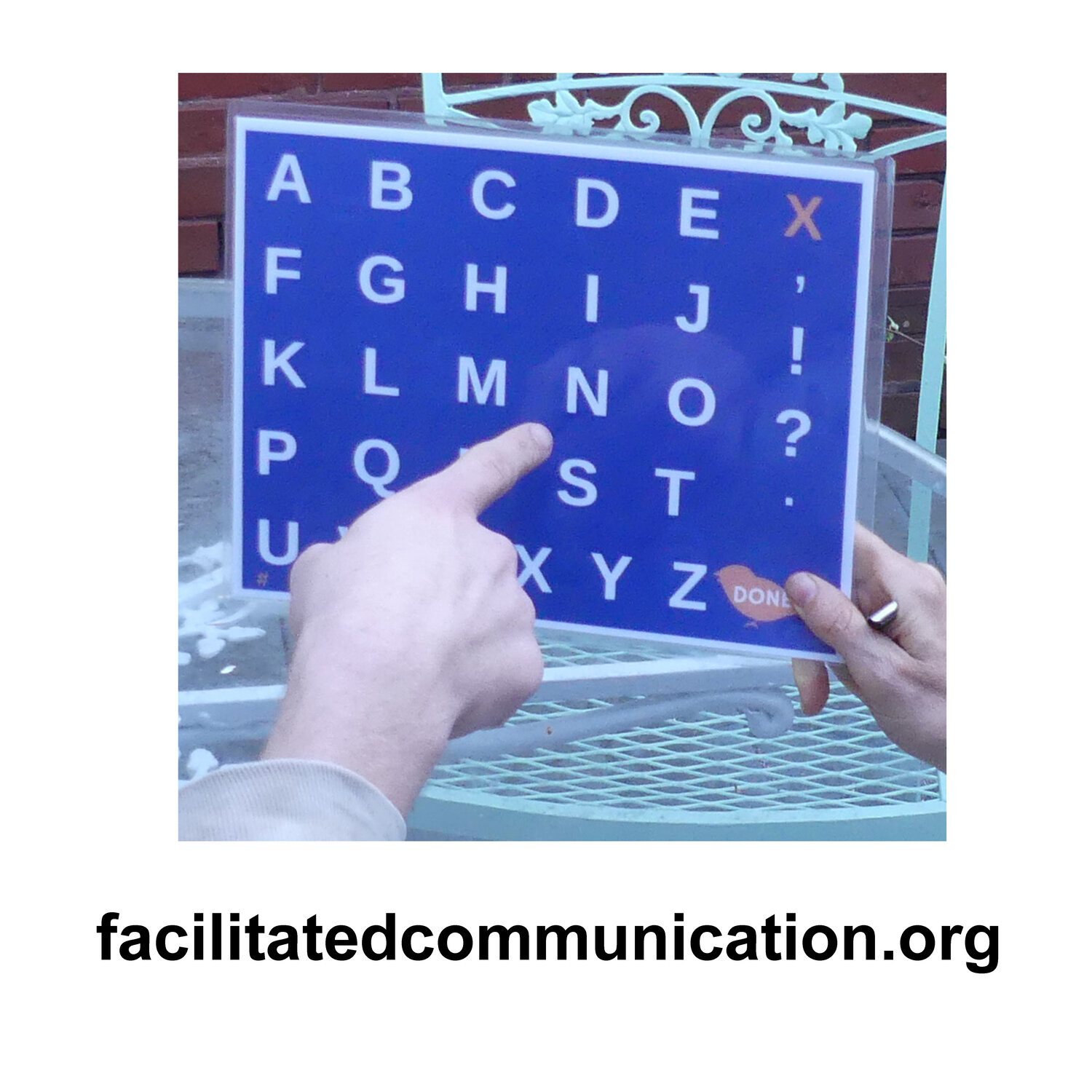
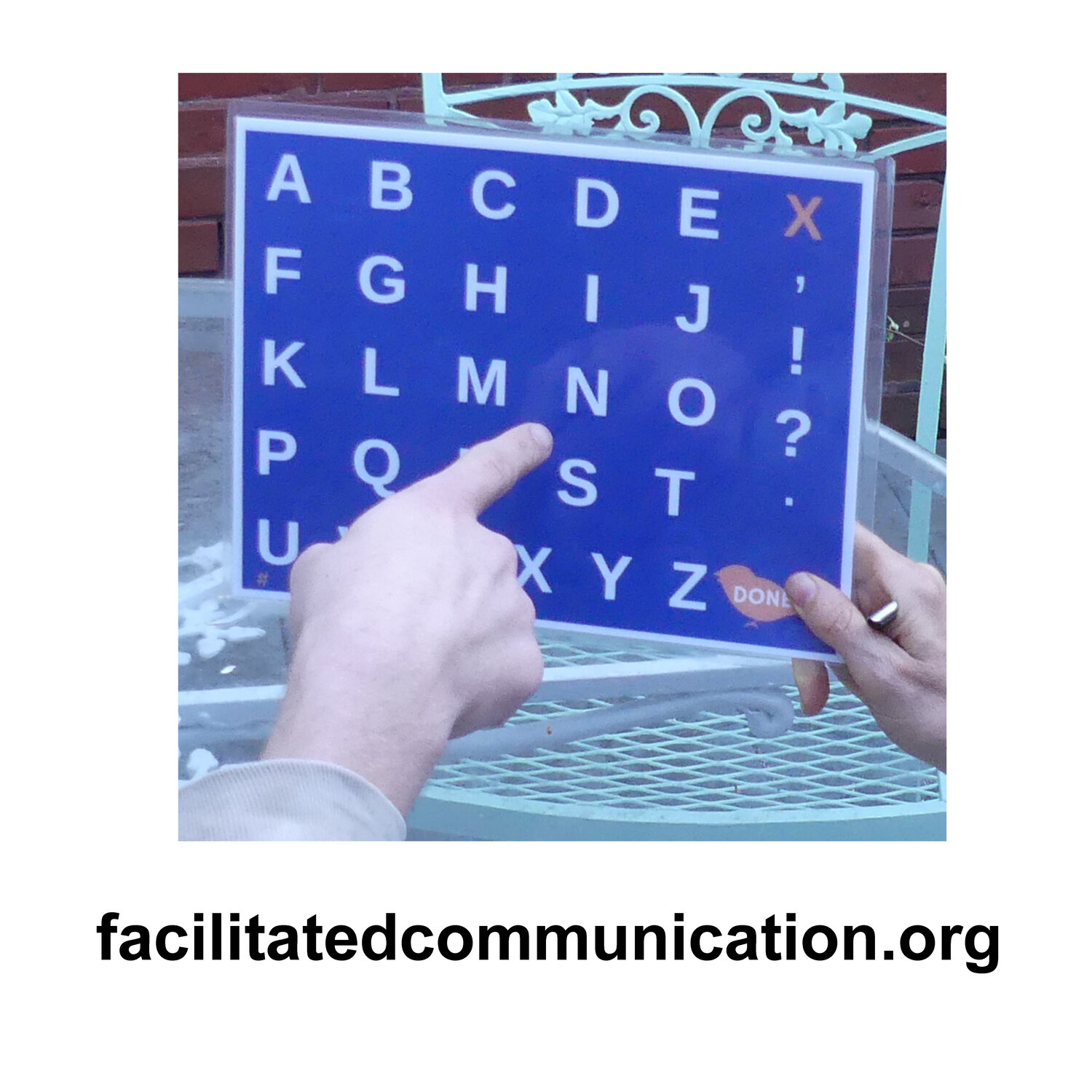
This metaphor came to mind recently after listening to an episode of the Uniquely Human podcast. In that episode, authorship testing was criticized as unnecessary, while the principle of presuming competence was promoted and Spelling to Communicate (S2C) was presented as a legitimate method of expression for minimally or nonspeaking autistic individuals. During the podcast, it was also suggested that experts who question facilitated communication and related spelling-based methods do so for financial gain. This claim misrepresents the motivations of many researchers and clinicians who have raised concerns about these approaches. The call for authorship testing arises not from financial incentives but from decades of empirical research and an ethical obligation to ensure that the voices attributed to nonspeaking individuals are truly their own.
Over the years, I have been repeatedly criticized for my position on facilitated communication and related methods, including spelling-based systems and rapid prompting approaches, as well as for my insistence on the necessity of authorship testing to establish independent communication. My concern has always been that without careful verification, it becomes impossible to determine whether the messages being produced originate from the individual with autism or from the influence of the communication partner. When this distinction is ignored, the risk is not simply scientific error, but the potential misattribution of thoughts, intentions, and authorship itself. My position is not new, nor is it motivated by hostility toward the individuals who practice or support these methods. Rather, it arises from decades of research, controlled investigation, and close professional engagement with individuals who have been affected by these approaches. It is also informed by careful observation of what occurs when claims about communication are accepted without sufficient scrutiny. These experiences have reinforced the importance of examining such claims with scientific rigor and methodological care.
At the center of the issue is a straightforward scientific question, namely, who is the author of the message? When a person types, points to letters, or spells words with assistance from another individual, it is not sufficient to assume that the message originates from the person with the disability. Science requires that authorship be tested. Controlled authorship testing where the facilitator does not know the information being asked has repeatedly demonstrated that the messages originate from the facilitator rather than from the individual who is presumed to be communicating.
This is not an accusation of deception. In many cases the facilitators are sincere, compassionate people who believe they are helping. But sincerity is not the same as accuracy. Human beings are highly susceptible to unconscious influence. Without safeguards, subtle physical guidance, expectation, and suggestion can shape the output in ways that neither participant fully recognizes.
Let me be clear, the consequences are not theoretical. Over the years there have been documented cases in which facilitated messages produced false accusations, misrepresented an individual’s abilities, or led families and educators to make decisions based on communications that were not actually authored by the person they believed they were hearing from. The harm in those cases did not come from cruelty. It came from misplaced certainty. Because of this history, the call for authorship testing is not an attack. It is a safeguard. If a communication method is genuine, authorship testing should confirm it. If it does not, then the method must be reconsidered. The standard is the same one applied in every other scientific and clinical domain that claims about outcomes must be verified.
Critics sometimes interpret this insistence on evidence as a refusal to believe in possibility or as an attempt to limit hope. That interpretation misunderstands the purpose of testing. The goal is not to deny communication; it is to ensure that when we claim to hear a person’s voice, we truly are hearing that person. The difficulty arises because facilitated communication and its variants often promise something profoundly appealing - the sudden emergence of complex language in individuals who have not previously demonstrated independent symbolic communication. For families, teachers, and practitioners who care deeply about the individuals they support, that promise can be extraordinarily compelling. It offers hope, meaning, and a narrative of hidden intelligence waiting to be unlocked. No doubt, hope is powerful but hope alone cannot determine whether a claim is true.
Returning to the metaphor of the bee and the fly, the disagreement is not about whether the garden exists. It is about how we decide what is truly there. Evidence functions as our way of distinguishing nectar from illusion. Without it, belief can easily drift toward what we most want to see rather than what is actually present. The paraphrased version of de Mello’s story about the bee declining to explain honey to the fly captures a practical reality about public debate. Not every disagreement can be resolved through discussion or argument. When people are committed to fundamentally different interpretations of evidence, persuasion may not occur no matter how carefully the data are presented. Recognizing that limitation does not mean abandoning the conversation entirely. It means acknowledging that scientific standards must remain consistent regardless of criticism. The responsibility of researchers and clinicians is not to win debates but to protect the integrity of the methods used to understand human behavior and communication.
In the context of autism and related developmental conditions, that responsibility carries additional weight. The individuals at the center of these discussions often cannot easily advocate for themselves in traditional ways. Claims made on their behalf must therefore meet especially high standards of verification. When a message is attributed to a person who cannot independently confirm authorship, we must be certain that the attribution is justified.
For this reason, my position remains straightforward - I firmly believe based on my behavioral science background, experience as a practicing clinician working extensively with persons who or non- or minimally speaking, that communication methods that rely on assisted pointing or spelling must demonstrate authorship through controlled testing. Without that evidence, the messages cannot be assumed to originate from the individual in which they attribute. This stance does not assign blame to those who believe otherwise. Many advocates of facilitated communication are motivated by empathy and dedication. But good intentions do not exempt any method from scientific scrutiny.
In the end, the garden is large enough for many perspectives. Some will continue to see flowers where others see uncertainty. What matters is that the standards used to evaluate claims about communication remain grounded in evidence. The bee’s work, after all, is not to argue about nectar. It is simply to keep searching for it.
Recommended Reading
Controlled Studies
Hemsely, Bronwyn, Beals, Katharine, Lang, Russell, Schlossers, Ralf W., Shane, Howard, Simmons, William, Skinner, Sharon, and Todd, James. (2025, October 1): Safeguarding the communication rights of minimally- or non-speaking people who are vulnerable to Facilitated Communication, Rapid Prompting (Spellers Method) and variants, Research and Practice in Intellectual and Developmental Disabilities. Research and Practice in Intellectual and Developmental Disabilities. DOI: 10.1080/23297018.2025.2544116
Shane, Howard C., White, Leigh Anne. (2026, February 27). An Educator’s Guide to AAC: Supporting Communication and Language Learning. Brookes Publishing. ISBN: 978-1681257433