Back and forth with Barry Prizant
Barry Prizant has gotten back about having Howard Shane and me on the Uniquely Human Podcast—an overture I made on my last blog post. He won’t have us. As he explained on his Facebook page, where I posted a link to that blog post, his show “is designed to lift up the voices of neurodivergent people in respectful ways, based upon lived experience, which is a pillar of evidence based practice, which apparently you still have not read about.”
Nonetheless, I’m happy to invite Prizant and any other pro-FC (or anti-FC, or FC-undecided) people who live in the general area to attend an upcoming community forum on FC at the Higashi School in Randolph, Massachusetts. The event is open to the public and starts at 6 PM on April 14th. Howard Shane and I will be panelists, along with William Ahearn.
In the meantime, I’m happy to post the latest things Prizant has said about me.
At the end of his last podcast, which came out after my last blog post, Prizant continued to make good on his promise to name names—specifically those of his “naysayers” (Prizant’s term for “people who disagree with me.”):
Do we believe some of the naysayers, such as Katharine Beals, who with no clinical degree or certification, but lots of opinions, implied that non-speakers on this very podcast are not communicating their own thoughts without even meeting them or observing them? Or that Dave, my co-host, and guests with clinical diagnoses could not be neurodivergent because their speech was too fluent?
Here are the replies I would have given, had I been considered sufficiently neurodivergent, respectful, and/or knowledgeable about lived experience to appear on Uniquely Human.
Re clinical degree or certification: Prizant appears to think that official clinical credentials are required to address questions concerning non-speaking autism. Other types of degrees or experiences don’t count including, apparently, certain types of lived experiences—i.e., the lived experiences of Prizant’s naysayers.
Re opinions: Interested readers are invited to compare my and Prizant’s writings and judge which one of us backs up our statements—say about whether apraxia and/or regulation problems are the main causes of the profound communication difficulties in minimally speaking autism—with objective, empirical evidence, and which one of us has only cited anecdotal reports of lived experience, much of it of it generated through Spelling to Communicate (S2C).
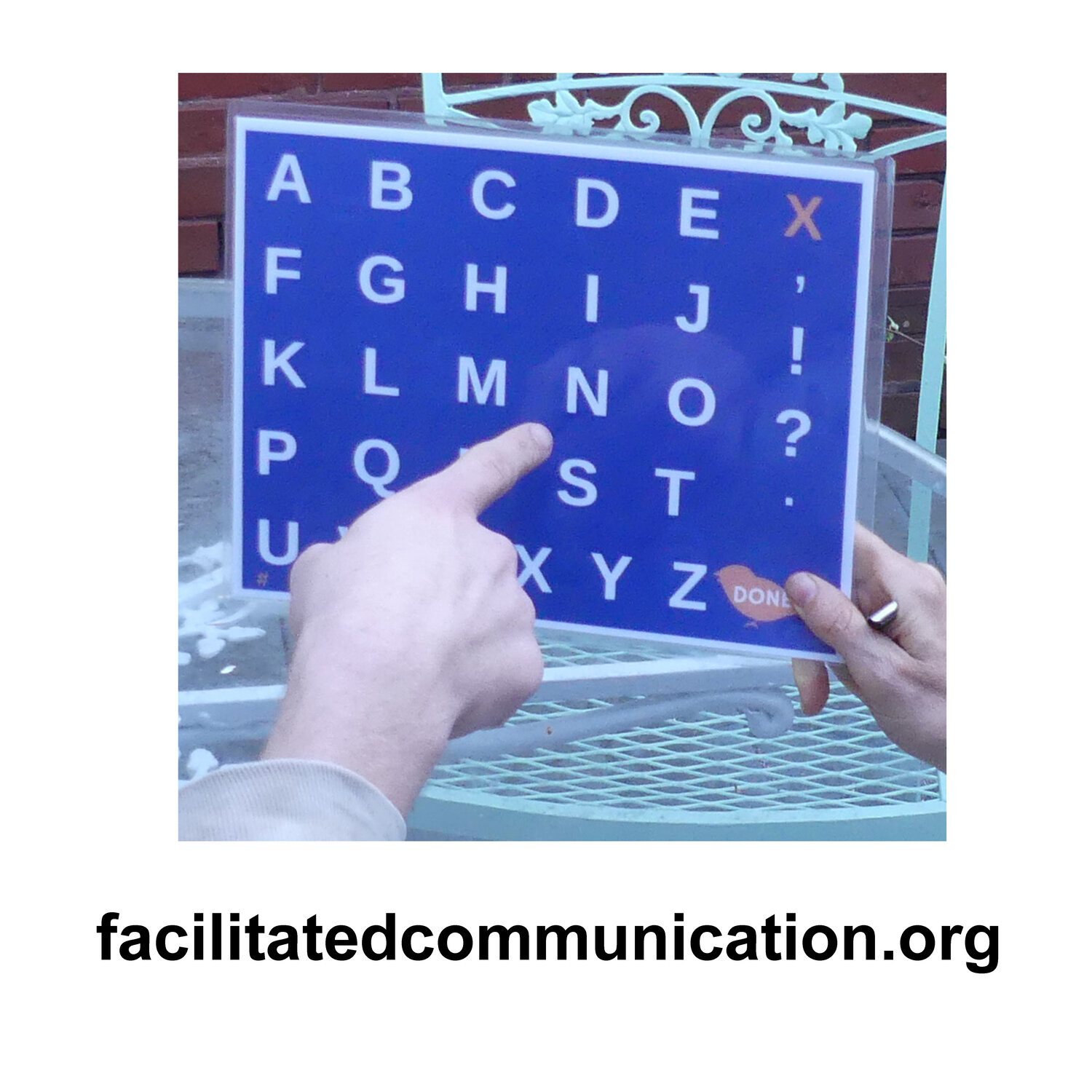
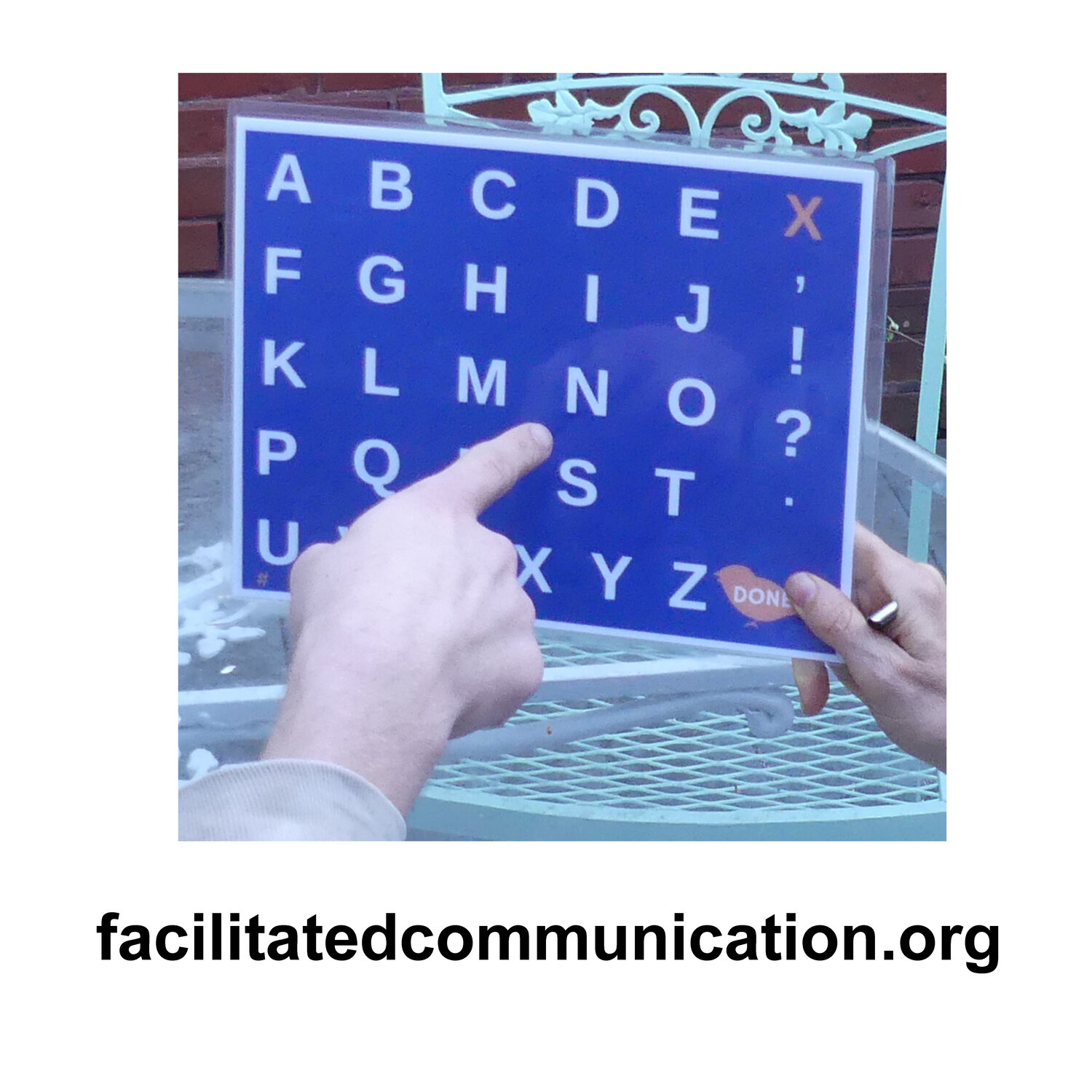
Re the non-speakers on the podcast: The non-speakers on Prizant’s show are characterized as using Spelling to Communicate. S2C resembles other forms of facilitated communication in which facilitator control has been definitively established. Recent reports and public videos of S2C-users identifying stimuli that only their facilitators were shown, which some people have characterized as “telepathy,” indicate that S2C facilitators can completely control messages even through cues that most observers can’t detect. Meeting and observing the non-speakers who appear on Prizant’s podcast is not enough to establish whether they are communicating their own thoughts. The only way to establish that is through blinded testing.
Re Prizant’s co-host: Here’s the entirety of what I’ve written about him, excerpted from a blog post I wrote a year ago:
First, let’s consider Prizant’s co-host, David Finch, who introduces himself at the beginning of the show as, among other things, “being on the spectrum.” In one episode, he characterizes himself as a “fellow autistic” of one of the podcast’s non-speaking, S2Ced individuals. Finch was diagnosed as an adult by his wife, a speech-language pathologist, with Asperger’s Syndrome. (Autism Spectrum Disorder, which has absorbed Asperger’s Syndrome, is typically diagnosed by child psychologists, child psychiatrists, or pediatric neurologists).
Since receiving that now-obsolete diagnosis as an adult from his spouse, Finch has had numerous speaking gigs. On his website, he describes himself as a “writer, autism consultant, keynote speaker, and New York Times best-selling author on neurodiversity and relationships.” You can see him in action—socially dynamic and smooth-talking—here and here. At one point on the Uniquely Human Podcast, Dave states that his speech includes a lot of “false starts” and that, before editing the Uniquely Human podcast, he discovered that there were occasionally 10-minute pauses between some of his spoken words. None of this is evident the videos I linked to above.
Prizant proceeds to accuse his naysayers of hypocrisy. Our alleged hypocrisy is to cite lack of evidence for FC as a reason to reject it while also suggesting that lack of evidence shouldn’t rule out other practices. But no one is rejecting FC solely for lack of evidence. Those who reject FC reject it because there’s both no evidence for it and significant evidence against it. Indeed, it’s the evidence against FC that primarily drives us. The evidence against traditional FC comes from all the message-passing experiments that uniformly showed facilitator control. The evidence against newer variants like S2C comes from its similarity to FC in terms of the facilitator’s opportunities for influence over letter selection; from its generation of message content that’s inconsistent with what’s known about language skills in non-speaking autism; and, most recently, from the reports (and videos) of S2C-users identifying stimuli that only their facilitators were shown, which some people have characterized as “telepathy,” but which scientists would characterize as facilitator control.
Prizant concludes by saying:
The people who have been most critical and have impacted the lives of non-speakers and Gestalt language processors show virtually no understanding of the relationship between regulation and communication, nor an understanding or current deep understanding of autistic people. So, my advice to them...it's time for you all to get to know the non-speakers, the Gestalt language processors, the parents, and the family members. Rather than avoiding the communities, you take it from there.
Prizant provides no evidence for any of these claims: no evidence for a relationship between regulation and communication that his naysayers have ignored; no evidence that his naysayers haven’t spent time—indeed, lots of time, in some cases daily—with autistic people, non-speakers, and their family members. As for whether we’ve spent time with gestalt language processors, that depends on whether they actually exist—and here, too, the evidence is sorely lacking (see Bryant et al. 2024).
In his exchange with me on Facebook, Prizant’s unsupported claims continue. After explaining to me why Uniquely Human “is currently the number one podcast in autism, psychiatry, and ADHD” and that on it “you’ll hear the voices of many diagnosed people who speak in non-literal language, and in many ways are far more articulate and coherent than the arguments you choose to make,” and also informing me that that I am not a “professional educator,” he writes:
[M]any people who read this exchange do not know that we went toe to toe in a lawsuit a year ago in which each side presented a much more comprehensive presentation of the arguments in expert witness reports, so please tell me why your side settled and folded, not allowing the arguments to be presented at trial? And yes, the young man in question agreed to the message passing test, even though the judge said it was not necessary as the judge believed what he was going to share, so you cannot pull that out as the reason.
Settlements, of course, don’t occur unless both parties agree to them. Prizant seems not to have considered the possibility that the school district had been offering settlements all along and that it was the other side that folded. As for the message-passing test, court transcripts indicate that it was agreed to only after much resistance; and unless you’re telepathic, you can’t know what judges believe. As I wrote back:
Re the Lower Merion case, I've acquired a transcript of the voir dire in which the message-passing test was failed. None of us knows whether the judge believed what was going to be shared; what we do know is that the judge did not rule in favor of the plaintiff's attempts to block message-passing tests at trial. My best guess is that that is why the plaintiffs finally accepted a settlement (Lower Merion had been offering settlements all along). While I've seen more subtle instances of cueing in S2C than I saw when observing S2C in courtroom in the LM case, the cueing was subtle enough that LM was worried that a jury wouldn't notice it (especially in light of all those reports of telepathy--where S2C cueing has proved to be so subtle that many people have indicated that they believe that telepathy is more likely than facilitator cueing). The LM voir dire transcript is publicly available for anyone interested, but I've also written a series of blog posts with excerpts. For those who are interested, here is my final post, which recaps the case and discusses what led up to the settlement. https://www.facilitatedcommunication.org/blog/spelling-to-communicate-goes-on-trial-part-vii-the-conclusion
Prizant did not respond to this, but here is one of his followers, apparently under the impression either that the observations I had shared in my post on Prizant’s Facebook page were allegations I had made as an expert witness (my role as an expert witness was not about cueing), and/or that only professional cueing experts equipped with high-tech tools can make observations about cueing:
I don't quite understand how you see yourself as the authority on observing cuing at any time, let alone in a courtroom environment.
And apologies for explaining the basics, but in a courtroom environment, an allegation of cuing requires expert evidence. Expert evidence in this case would undoubtably [sic] involve recordings and detailed computational or movement analyses to accurately identify and particularise the alleged cuing movements and behaviours (similar to the types of analysis undertaken by Prof Elizabeth Barbara Torres [an FC supporter who has never analyzed facilitator cues]).
Without that, you are — at best — making serious assertions based on subjective personal impressions, which is not an appropriate or responsible basis for allegations, whether made inside a courtroom or outside of it.
She goes on to explain that
many of us love being challenged by people with different views that are grounded in rigorous science, proper methodology, and intellectual honesty. Robust science uplifts standards and service provision.
But let's make no mistake - that is *NOT* what you do. Instead of using proper methodology, evidence and relevant expertise, you troll non-speakers around the world and disseminate defamatory and demeaning public commentary on them. That is as far away removed from established and ethical evidenced-based approaches as you can get.
And if I can say one thing - do better. We all welcome challenge, but not by someone who does not have the will or the capacity to actually do it.
“Many of us love being challenged by people with different views that are grounded in rigorous science, proper methodology, and intellectual honesty;” Our naysayers are vicious trolls far removed from evidence-based approaches; “We all welcome challenge.”
Wouldn’t it be nice if any of this were actually true?

Image by ChatGPT
REFERENCES:
Bryant, L., Bowen, C., Grove, R. et al. Systematic Review of Interventions Based on Gestalt Language Processing and Natural Language Acquisition (GLP/NLA): Clinical Implications of Absence of Evidence and Cautions for Clinicians and Parents. Curr Dev Disord Rep12, 2 (2025). https://doi.org/10.1007/s40474-024-00312-z
