If It Sounds Too Good to Be True…
There is a new novel out this week that is already all the buzz. It is titled Upward Bound, and it is ostensibly written by a 28-year-old profoundly autistic nonverbal man, Woody Brown.

This screenshot from 4/1/26 shows The Today Show host uncritically reviewing a book credited to Woody Brown but written via a form of Facilitated Communication called “Rapid Prompting Method” with “support” from Woody’s mother as facilitator.
The publication and extensive promotion of this book by Woody’s mom and the publishing company—Penguin Random House—and all of the publicity it has already garnered ignore the elephant in the room: Is Woody the actual author of the book?
Before I point out some facts of this case and pose some questions that should've been asked early on in this saga, there is an old proverb that says, “If it sounds too good to be true, it probably is.” A similar sentiment was stated by the late astronomer and skeptic, Carl Sagan, who said “Extraordinary claims require extraordinary evidence.“
So, in this case what is it that sounds too good to be true and what are the extraordinary claims?
The extraordinary claim is that Brown, a profoundly autistic nonverbal individual who had never learned to communicate independently—to speak, to read, or to write— showed sudden linguistic competence well beyond his years when his mother began using a technique with him variously known as Facilitated Communication (FC), aka Rapid Prompting (RP), aka Spelling to Communicate (S2C).
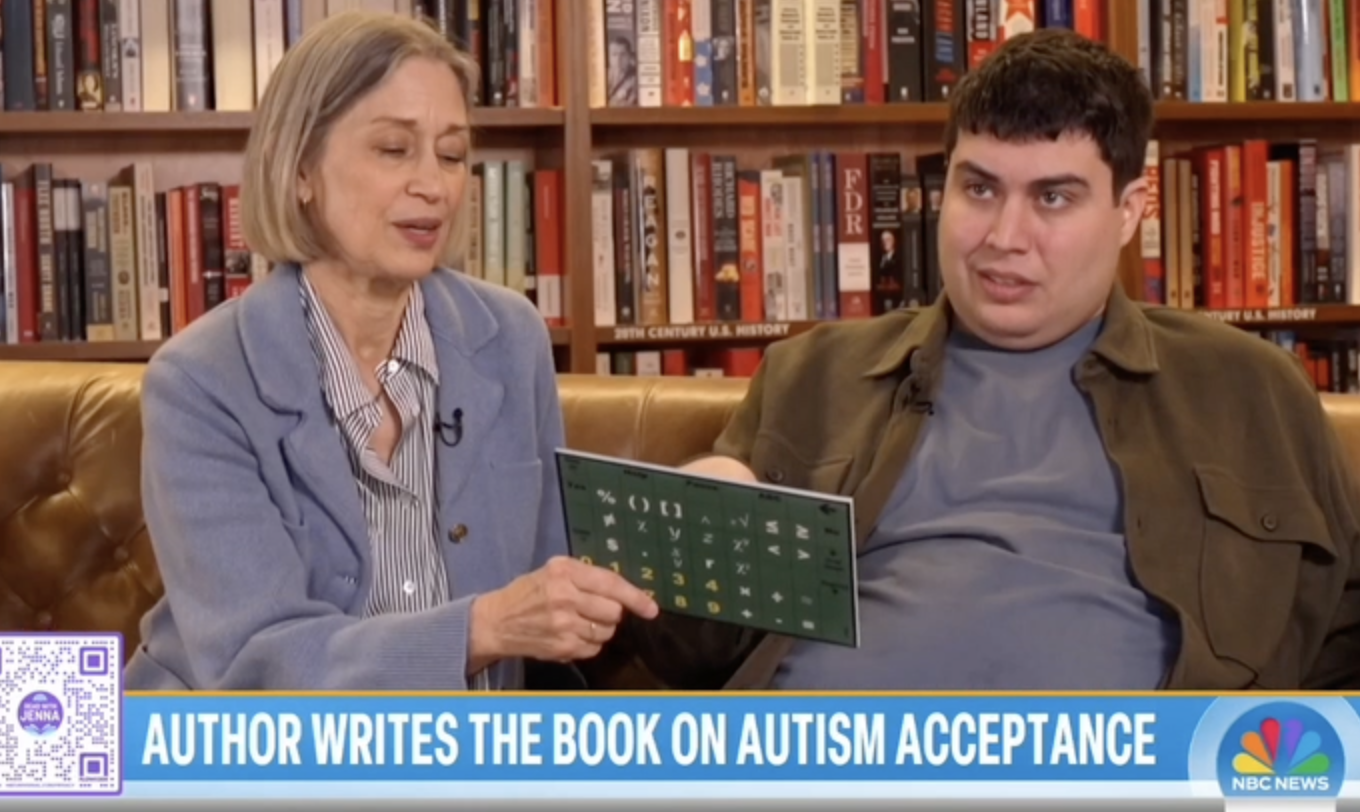
With RPM, the facilitator holds the letter board in the air while the person being facilitated extends a finger toward it. Here, the facilitator maintains eye contact with the letter board, but Woody points without looking. (The Today Show 4/1/26)
Woody’s mother claims that Woody had always been an intelligent and highly verbal individual trapped in a body that didn’t work (a claim made by all proponents of FC and its variants about nonverbal individuals with autism). Then, with his mother constantly by his side interpreting what Woody was presumably typing on the letter board, he allegedly earned degrees in English from UCLA and from Columbia University. He is now alleged to have written the novel Upward Bound.
With these techniques, the nonverbal individual is made to point to letters on a letter board held and moving around in midair by a facilitator. The facilitator—in this case, Woody’s mom—then interprets what is presumably typed out on the letter board. Critically, the letter board is not an electronic keyboard in which pressing a letter would produce either an audible and/or visual record of the letter that was pressed.
In case after case over the last 30+ years, when this technique was used with nonverbal individuals, sudden and surprisingly sophisticated linguistic confidence emerged.
Shortly after these techniques were introduced in the United States in the early 1990s, serious scientists began investigating the claims of authorship. After dozens of studies over three decades, the results are clear and unambiguous: in every case the author of the communications resulting from these techniques is always the facilitator and never the individual being facilitated.
Of course, such compelling research results raise staggering ethical questions about the use of these techniques.
This article is not about Woody specifically, but rather uses his case to illustrate the dangerous pitfalls of these techniques in general.
Because I will make reference to some of the videos showing Woody’s mom facilitating with him, I am attaching a couple of links to news stories showing the videos.
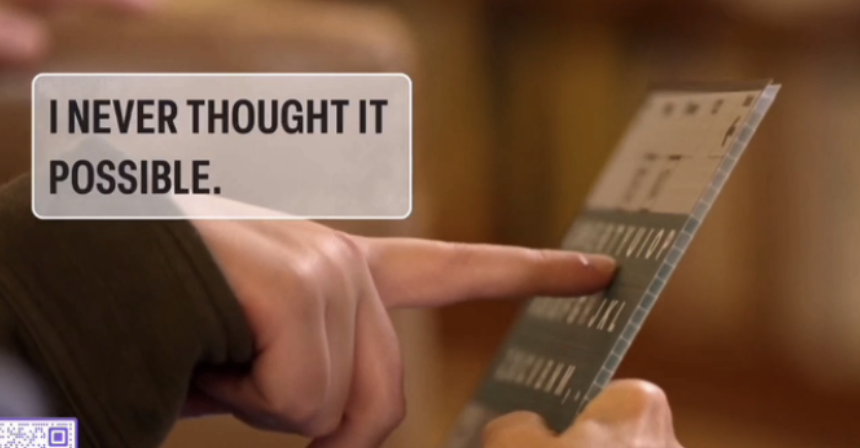
In the video FC-sessions on the Today Show, Woody frequently touches the space between letters, not on the letters as his mother calls out words she believes Woody has spelled. (The Today Show 4/1/26)
Here are some important things to consider while viewing these videos and while considering these techniques in general.
Woody rarely ever touches any of the letters that he is supposedly typing. In fact much of the time he doesn’t even touch the board.
He is often not even looking at the letter board, but his mother is.
The letter board is held (moving around) in midair by the person who has the most to gain by Woody’s sudden linguistic competence.
His mother is the only one who can “interpret” what he is supposedly typing.
There is no correspondence at all between the letters he is supposedly hitting and what she reports he is typing.
His mother relays a lot more information than what his finger is actually doing even if it does occasionally touch the letter board.
All these observable facts lead to one and only one shocking conclusion: That it is his mother, and not Woody, who is the author of all the communications.
Woody’s case, along with the cases of dozens of others for whom similar claims have been made, raises serious questions.
When, where, and how did Woody learn to write? The rest of us learned to write by being exposed to reading and being taught how to read and write. There is no scientific evidence for anyone developing sudden highly sophisticated linguistic skills in the absence of such a learning history. In fact, coincidentally, in Woody’s case, his linguistic skills appear to match perfectly those of his mother.
If there is any question whatsoever about authorship—a serious question—why won’t any of these parents or FC proponents allow an easy, simple, and nonintrusive test to determine who, in fact, is the author of the communications?
How is it possible for someone to type with one finger on a letter board moving around in midair without looking at it?
Why won’t Woody’s mom, or any of the other proponents of FC and its variants, simply place the letter board on a table and allow the autistic person to go over to it and type whenever they want?
In fact, rather than using a letter board, why don’t they simply use an electronic keyboard like the rest of us use so that when the keys are pressed, there is a visual and/or audible record of what is actually pressed? That would at least confirm that what his mother is saying corresponds to what letters are bring pressed.
Previously I mentioned that there were staggering ethical implications if Woody and others like him are not the authors of the communications.
These implications should jump out to everyone. If he is not the author of these communications, and all of the evidence points squarely in that direction, then…
Who wrote the book?
Who earned the college degrees?
Who is doing all of the interviews?
As someone who has over the last 30+ years seen too many of these cases, I can tell you this. After all the hoopla dies down, and as Woody’s mother becomes older and unable to take care of and communicate for him, he will likely be institutionalized.
All of the time and effort and money spent on this sad charade prevents these nonverbal autistic individuals from receiving the real treatment and therapy they need to learn as many functionally independent skills as possible.
Let me conclude by saying this: the goal should always be to teach nonverbal individuals to communicate independently. Otherwise, we run the risk of putting our words in their mouths. There are numerous methods and assistive techniques available that can be used without the individual’s communication being dependent upon another person sitting next to them and interpreting what they presumably type out on a letter board.
In the case of Woody Brown, and all of the other nonverbal autistic individuals who are subjected to these techniques, I’m afraid that sadly and unfortunately it is too good to be true that they can communicate in such sophisticated ways.
If you're interested in information about FC and its variants, please check out the following website: https://www.facilitatedcommunication.org
Today’s guest post is from Dr. Hank Schlinger’s Substack and reprinted here with permission. Note: The images used here were not part of the original article.
Dr. Schlinger is a behavioral scientist, professor, speaker, skeptic, and author of more than 100 basic research and theoretical articles and four books, including his most recent book: How to Build Good Behavior and Self-Esteem in Children.